King Albert I and Queen Elisabeth stayed in De Panne on the Belgian coast from the end of October 1914 for almost the whole of the First World War. They lived there in one of four villas on what is now the Leopold I-Esplanade. From there Albert I led the Belgian army.
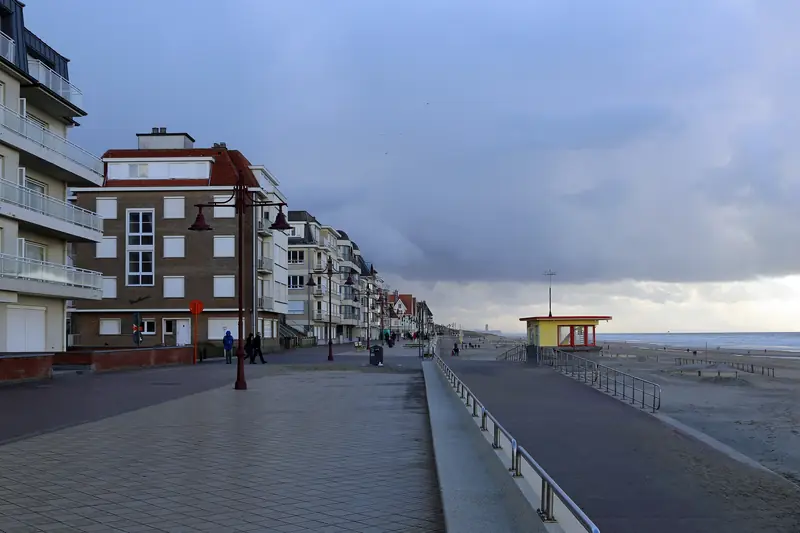
Nothing is left of those villas. They were blown up towards the end of the Second World War, and apartment buildings stand on the site. So when you visit De Panne, you follow this story by way of memorials and a chapel.
How the royal couple ended up in De Panne
The German army invaded Belgium on 4 August 1914. Albert and Elisabeth went by way of Antwerpen and Oostende to Nieuwpoort. The government withdrew to France. The royal couple themselves did not want to leave the country.
In the end the front stalled at the IJzer, after Belgian soldiers in Nieuwpoort had opened the sluices. You can read how that happened in the story about the flooding of the IJzer plain. A small piece of Belgium thus stayed unoccupied, with De Panne in it. According to the municipality of De Panne, in those years it was, as it were, for a while the capital of unoccupied Belgium.
The four royal villas
The villas were summer residences of the Bortier-Calmeyn family, without running water, electricity or heating. The owners had fled to France because of the war. In October 1914 Albert and Elisabeth moved in, on the recommendation of the foreign minister Julien Davignon.
Each villa had its own function:
- Villa Maskens: the residence of the royal couple, with three rooms downstairs and three bedrooms on the first floor.
- Bortier Pavilion and Villa de Terschueren: among other things security, administration and the staff (Etat-major).
- Villa St.-Joseph: Portuguese nuns, who set up a small school there.
There was not much comfort. In her diary Elisabeth wrote that they had moved into someone else's nest like cuckoo chicks.
As commander in chief, Albert I received there, among others, the French president Raymond Poincaré, Georges Clemenceau and the generals Ferdinand Foch and Joseph Joffre. In between, the couple lived a relatively ordinary life. Albert often took long walks through the dunes, they took Dutch lessons now and then, and the local hairdresser came to the house.
Elisabeth and L'Océan hospital
Within walking distance of Villa Maskens stood L'Océan, a summer hotel from 1904 on the seafront. Doctor Antoine Depage set up a Red Cross hospital there in December 1914, with Elisabeth's help. It began with 200 beds.
According to the municipality of De Panne, Elisabeth regularly assisted Doctor Depage. The number of wounded treated differs by source. The municipality gives 36,000, VRT NWS more than 24,000.
Several bombs fell on L'Océan, with fatal consequences. From June 1917, part of the hospital therefore moved to Vinkem. L'Océan hospital stayed in operation until 15 October 1919.
To De Moeren and back
In the summer of 1917 the German bombardments of De Panne increased. A breakthrough towards Duinkerke was also feared. Albert and Elisabeth moved to Sint-Flora castle in De Moeren, a village that is part of Veurne. Now and then they still stayed at Villa Maskens.
On 31 July 1918 they returned to De Panne. On 24 October 1918 they moved into the castle of Loppem. Elisabeth afterwards returned once more to Villa Maskens and stayed there until February 1919. In 1940 she again sought shelter there for a while. By then Albert had already died, in 1934.
What is left of the villas
During the Second World War the Germans built bunkers in De Panne. At the end of the war they were dynamited, and the royal villas went with them. Ruins remained. By 1970 those too had gone.
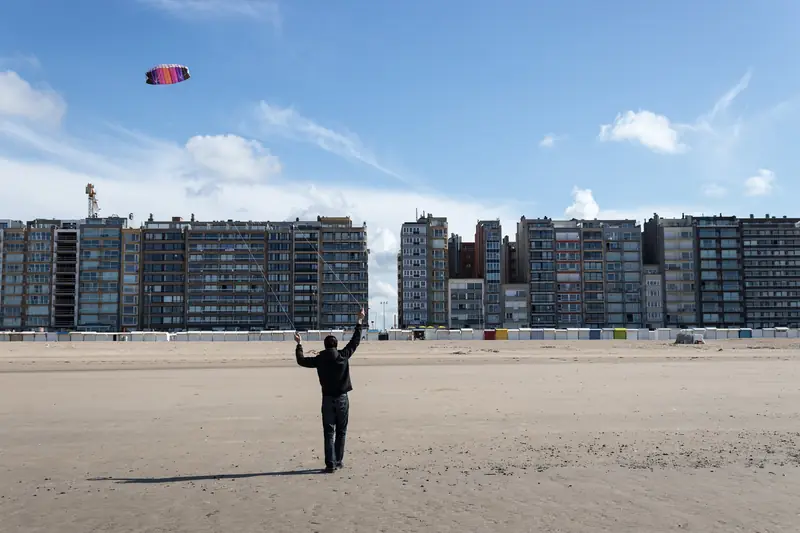
On the site stand the apartment buildings Residence Montreal, completed in 1977, and Residence Imperial, completed in 1986. They have seven to nine storeys and stand close to the monument to Leopold I.
What you can still see in De Panne
- Memorials on the Zeedijk: one for Queen Elisabeth, with her portrait in bronze, and round the corner one for Professor Depage and L'Océan hospital.
- The Royal Chapel: the Paterskerkje among the apartment blocks, built from 1906 to 1908. Albert I and his family attended Mass there during the war. A commemorative plaque recalls it.
- Museum Cabour WO II and 2/4 Lansiers: on the edge of the Cabourduinen. The museum is about the Second World War in the region and about the history of the 2nd and 4th Lancers regiments. Check the opening period on Visit De Panne.
- Adinkerke: in this village lay the Cabour military hospital, led by Doctor Paul Derache. You can read more about the village of Adinkerke and the Cabour dunes in a separate guide.
If you have little time, choose the memorials on the Zeedijk and the Royal Chapel. If you want to know more about the Second World War in the region, Museum Cabour is a better fit. If you are travelling with children, combine the visit with a day out from De Panne with children. If you then want to feel the wind, sand yachts on the beach are one possibility.
Frequently asked questions
Where did Albert I and Elisabeth stay in De Panne?
In Villa Maskens, the third of four villas on what is now the Leopold I-Esplanade. From there Albert I led the Belgian army.
Can you still visit Villa Maskens in De Panne?
No. The royal villas were blown up at the end of the Second World War. On the site stand the apartment buildings Montreal and Imperial. Memorials on the Zeedijk and the Royal Chapel still recall the war years.
What did Queen Elisabeth do in De Panne during the war?
She was regularly present at L'Océan hospital and assisted Doctor Depage there. She also took many photographs and in August 1918 set up a darkroom to develop her photos herself.
Where do you stay in De Panne?
On boekdekust.be you book holiday homes on the Belgian coast directly with the owner, and the booking is usually confirmed straight away. You can read an overview at holiday home in De Panne. If you are torn between a holiday home and a hotel, read holiday home or hotel on the coast.
Finally
In the First World War, De Panne lay in the small unoccupied part of Belgium, and the royal couple lived there. You can follow that story at the memorials on the Zeedijk and the Royal Chapel. If you want to stay the night, you can view holiday homes in De Panne.
Sources: VRT NWS: the story of Villa Maskens, Municipality of De Panne: First World War, VRT NWS: biggest front hospital in De Panne, Onroerend Erfgoed: memorials for Queen Elisabeth and Dr Depage, Visit De Panne: Chapel of the Oblate Missionaries, Visit De Panne: Museum Cabour, Onroerend Erfgoed: name stone of the L'Océan military hospital