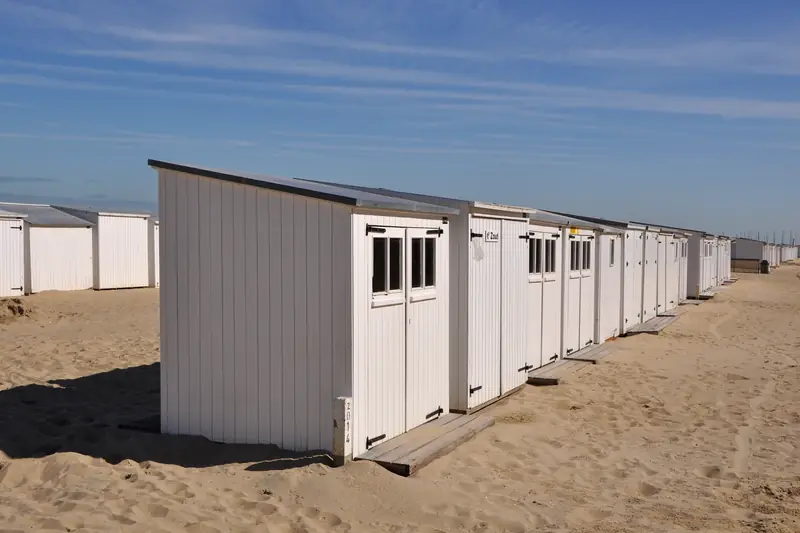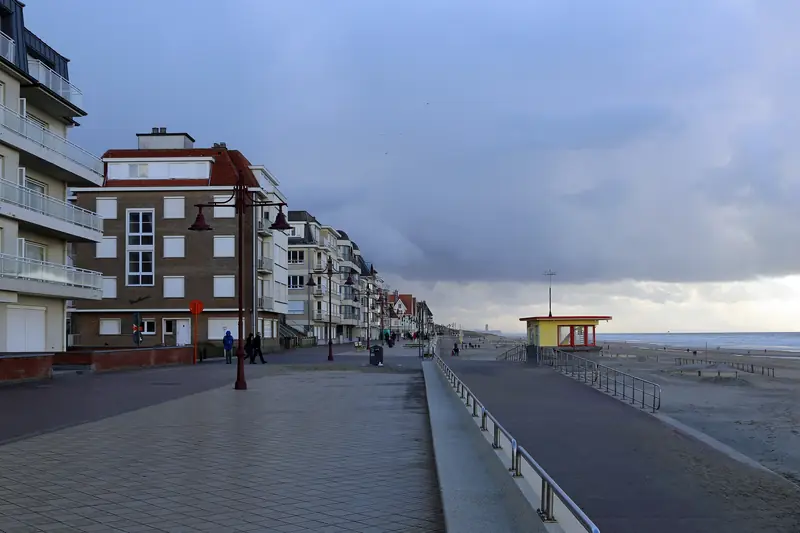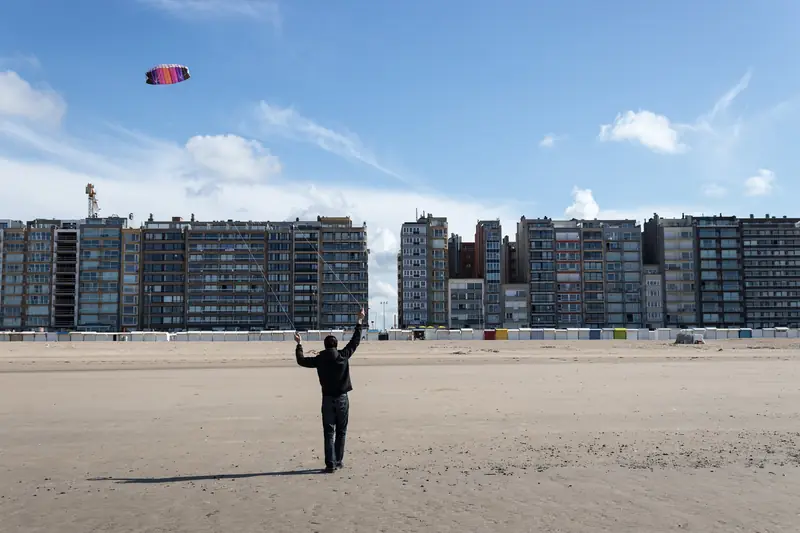
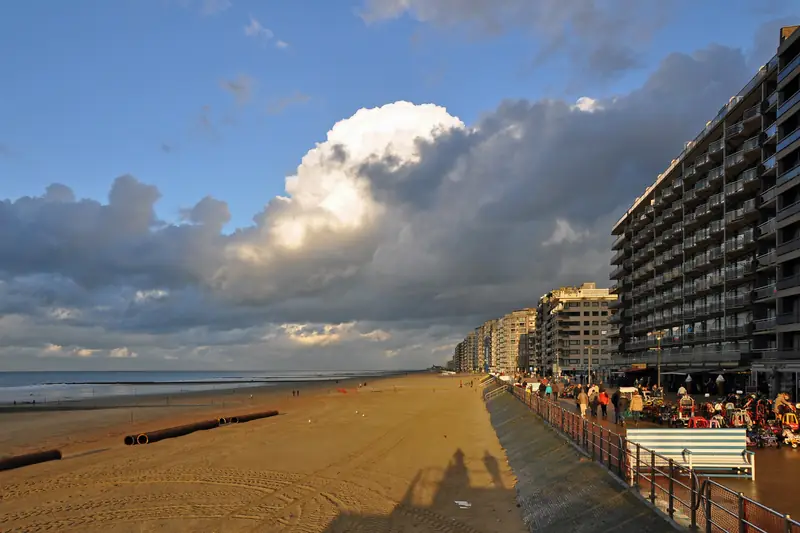
In autumn the coast gets its space back. The beach huts have gone, the sand lies wide and open, and the wind does the rest. You no longer come to sunbathe. You come to walk, to look, and to step indoors with red cheeks. Anyone who knows the sea only in July is missing something.
How to let the wind clear your head
Letting the wind clear your head needs no plan. You put on a coat and go down to the water. It still helps to look at the wind for a moment. Start your walk with the wind in your face, and come back with the wind behind you. Then the hard stretch is over by the time you tire.
At low tide, walk on the hard, wet sand close to the waterline. That is the lightest going. In a strong wind, the strip behind the dunes, or a path through the dunes, is a quieter choice. And plan a finish with something warm: a bowl of soup or a coffee tastes twice as good after an hour of wind.
Reading the tide
The beach changes all day. The water rises and falls without a break, and so the beach is sometimes wide and sometimes narrow. For an autumn walk that matters a great deal. At low water you have a broad stretch to walk on. At high water, little beach is left in some places.
Every two weeks there is a spring tide. That happens when the sun, the earth and the moon stand in one line. The water then comes in extra high at high tide, and stands extra low at low tide. When a spring tide coincides with a storm, people speak of a spring flood. Those are the days when the sea comes right up to the promenade.
You will find the times of high and low water in the tide tables and in the coastal weather forecast. Check them before you set off, above all if you are planning a long walk on the beach.
Watching a storm
An autumn storm at sea is a sight. The waves break far out, the foam flies across the beach, and the sky changes every five minutes. Wind blowing towards the land piles the seawater up against the coast. Because of that, in a storm the water stands higher than the tide table predicts.
You watch a storm from a distance. The best place is high and dry: a higher stretch of the promenade, a way over the dunes, or simply behind the window of a tearoom on the seafront. You see more there than down by the water, and you stay out of reach of the waves.
Staying safe in a storm
The sea is beautiful in autumn, but it forgives little. A few rules worth keeping in mind:
- Stay off the groynes. The stone groynes are wet and slippery, and a wave can break over them when you do not expect it. Rip currents form right by groynes and piers, and they pull you away from the coast.
- In a storm, do not go down to the waterline. With a strong onshore wind and a heavy surf, the undertow can be dangerous. The lifeguards then say that the sea is pulling hard.
- Keep children and dogs close to you. A wave comes further than you think.
- Follow the signs on the spot. If part of the promenade, a breakwater or a way onto the beach is closed, there is a reason for it.
- Watch for blowing sand and loose objects on the promenade.
Then the flags. In the supervised swimming zones, green means you may swim, yellow means you may swim but without floating or inflatable things, and red means swimming is too dangerous and so not allowed. The supervised bathing season is a summer matter. In autumn there are usually no lifeguards on the beach, and so no flags either. That no red flag is flying then tells you nothing about how safe it is. A swim in an autumn sea is better left for another time.
What you pack
The weather by the sea can go any way in a single day. In layers you are always fine:
- A windproof and waterproof coat with a hood.
- A warm jumper or a fleece underneath.
- Woolly hat, scarf and gloves. The wind makes it colder than the thermometer says.
- Waterproof walking shoes or boots.
- Dry socks in your rucksack.
- A vacuum flask with something warm.
- A torch, or your phone, for the way back, because it gets dark early.
Leave the umbrella at home. On the promenade one gust finishes it.
Why the autumn holiday is a good moment
The autumn holiday falls around All Saints' Day, in the middle of the season of wind and cloud. It is a week without the bustle of summer. There is room on the promenade, and in the restaurants too, and on the beach you sometimes walk for a quarter of an hour without meeting anyone.
For children it is a playground: looking for shells after a storm, flying a kite, building walls against the rising water. And if the weather really turns against you, there are museums and swimming pools enough along the coast. After that comes the best part of the day: coming indoors, shoes off, something warm on the table.
Finally
Autumn is the season in which the sea is itself. You need to do little for it: dress warmly, check the tide, and keep your distance when it storms. The wind does the rest. Want to feel it for yourself? View stays.
Sources: IKWV: signage, IKWV: tides, IKWV: currents, Agency for Maritime and Coastal Services, Coastal Division, Wikipedia: storm surge, Wikipedia: groyne