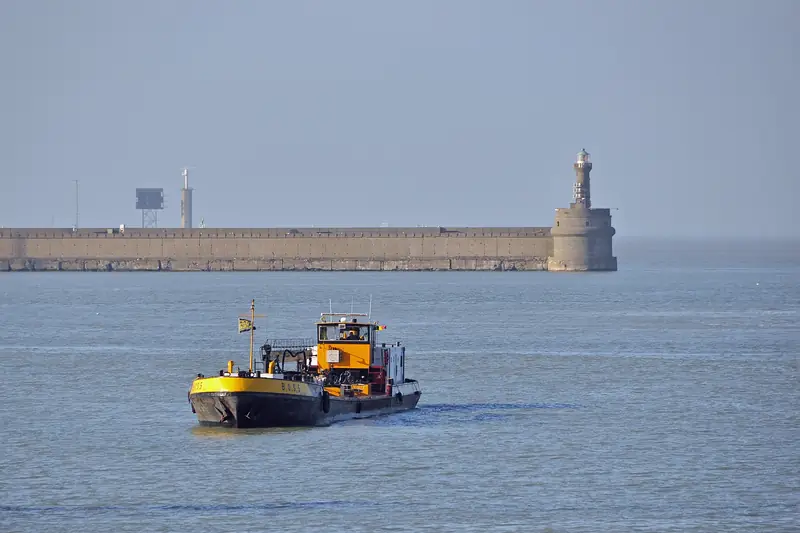
The Zeebrugge Raid was a British attack on the port of Zeebrugge, on the Belgian coast, on the night of 22 to 23 April 1918. The Royal Navy wanted to block the harbour entrance, so that German submarines could no longer put to sea. In Zeebrugge you will find the traces along the western harbour mole, by the church and in the cemetery.
The raid did not fully achieve its aim. Within a few days, German submarines could pass again at high tide. Even so, the British press presented the attack as a success, and the British still commemorate the attack every year.
Why the British attacked Zeebrugge
The Germans occupied the port of Zeebrugge on 14 October 1914 and made it a naval base. Their submarines lay at Brugge. Through canals they reached Zeebrugge and Oostende, and then the sea.
In front of the port lay a large harbour mole, known as “the Mole”. According to Wikipedia, the Leopold II mole of the port ran about two kilometres out to sea. VRT NWS puts the harbour mole at 2.5 kilometres. Heavy guns stood on the mole and along the coast.
Vice-Admiral Roger Keyes devised a plan. Old cruisers, filled with concrete, were to block the canal to Brugge. At the same time, troops were to land on the mole. They were to put the guns out of action if possible, and their attack would in any case draw attention away from the approaching blockships.
An earlier attempt in April was called off, because the wind made the smokescreen impossible. For the new attempt, the landing was planned for exactly midnight, at the start of 23 April. That is Saint George’s Day, the feast day of the patron saint of England.
The night itself: mole, submarine and blockships
A fleet of dozens of ships set out with about 1700 men. The cruiser HMS Vindictive sailed for the mole, together with two ferries, the Iris and the Daffodil.
A smokescreen hid the ships. Just before the landing, the wind turned. The screen blew away and the German guns opened fire. The Daffodil pushed the Vindictive against the mole, so that the men could go ashore.
Meanwhile the submarine C3 blew up the viaduct that linked the mole to the mainland. That happened at 00:15, with five tonnes of explosives. As a result, the German defenders could no longer bring in reinforcements.
Three old cruisers from 1890 served as blockships: the Thetis, the Intrepid and the Iphigenia. The Thetis did not reach the canal and sank in the outer harbour. The other two made it into the canal and were sunk there.
At 00:50 the siren of the Daffodil sounded. The signal to withdraw. On the British side about two hundred people died, among them Frank Brock, the inventor of the smokescreen. Eight Victoria Crosses were awarded.
An incomplete blockade, a great story
Aerial photographs quickly showed that the wrecks did not fully close the canal. The simultaneous attack on Oostende also failed. The wrecks in the harbour channel were only salvaged in 1921.
The British press called the raid a success all the same. The German press, on the other hand, saw in the defence of the mole a German victory. According to VRT NWS, British propaganda turned a fiasco into a triumph.
What you can still see in Zeebrugge
You can no longer see the mole of 1918 as it was then. According to Wikipedia, the Leopold II mole was absorbed into the Westerdam in the 1980s. VRT NWS writes that the concrete wall still exists, but lies enclosed in the larger harbour.
The Saint George’s Day walk
The walk runs along the western pier of the harbour. Wikipedia says it commemorates the British attack. Since a 500-metre extension in 2012, the path once again takes you out to sea.
According to the engineering firm SBE, the path is one kilometre long and four metres wide. There are benches and two semicircular viewing platforms. Walkers and cyclists share the path, and it was designed to the standards for public accessibility.
Church, cemetery and memorial plaques
The Erfgoedwandeling is 5.8 kilometres long and starts and ends at the cruise terminal. Metal studs with a harbour crane show the way. You pass the Visserskruis and the Sint-Donaaskerk with the military cemetery from the First World War. British and German graves lie in the cemetery.
Wikipedia also shows a memorial plaque in the cemetery, a British plaque in the harbour and a Saint George’s Day monument on the sea wall. The British commemorate the attack every year on 23 April.
More war history on the coast? Read about Atlantikwall Raversyde and about the war on the IJzer at the Ganzepoot in Nieuwpoort.
Getting there by tram or bus
The coast tram runs along the Belgian coast all year round. Zeebrugge has four stops. Two of them help you on this route:
- Strandwijk: for the beach, De Fonteintjes and the Saint George’s Day walk. The stop is by Zeebrugge-Strand station.
- Kerk: for the Sint-Donaaskerk, the Visserskruis, Admiraal Keyesplein and the cruise terminal.
Looking for somewhere to stay nearby? Read holiday home in Zeebrugge. Blankenberge lies west of Zeebrugge, so holiday home in Blankenberge also suits this outing. If you want to see the port from the water, read about the harbour boat trip in Zeebrugge.
Frequently asked questions
What was the Zeebrugge Raid?
A British attack on the port of Zeebrugge on the night of 22 to 23 April 1918. The Royal Navy wanted to block the canal to Brugge with sunken ships, so that German submarines could no longer put to sea.
Why did the raid take place on Saint George’s Day?
The landing was planned for midnight, at the start of 23 April. That is the feast day of Saint George, the patron saint of England. According to VRT NWS, Roger Keyes saw it as extra encouragement for his men.
Can you still see the 1918 mole in Zeebrugge?
According to VRT NWS, the concrete mole still exists, but lies enclosed in the larger harbour. To remember it, walk the Saint George’s Day walk along the western harbour mole in Zeebrugge.
How long is the Saint George’s Day walk in Zeebrugge?
According to the engineering firm SBE, the path is one kilometre long. Walkers and cyclists use the same path. By coast tram you get off at the Strandwijk stop.
Where do you stay in Zeebrugge?
On boekdekust.be you book holiday homes on the Belgian coast directly with the owner, and the booking is usually confirmed straight away. Guests pay a service fee. You can read which zone suits your plans in staying in Zeebrugge.
Finally
The Zeebrugge Raid lasted one night, but the traces still lie along the harbour. Walk the route and look for the memorial plaque in the cemetery. If you would rather stay longer, you can view holiday homes in Zeebrugge.
Sources: Wikipedia: Attack on the port of Zeebrugge, Wikipedia: Zeebrugge, VRT NWS: the raid, History of government: Zeebrugge and Ostend, Visit Bruges: cruise terminal, Visit Bruges: mobility, SBE: Saint George’s Day walk