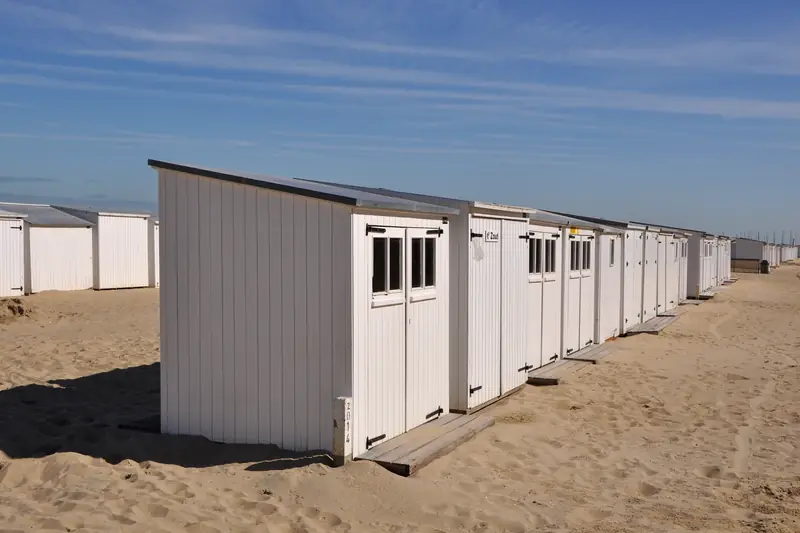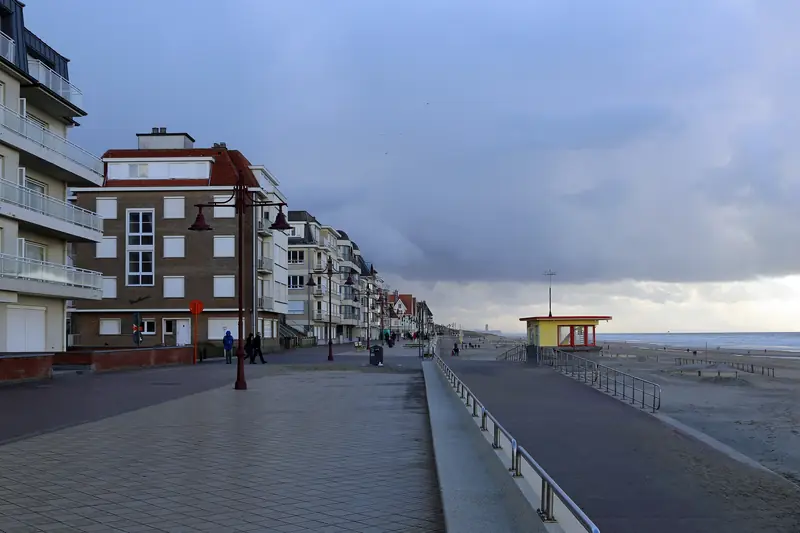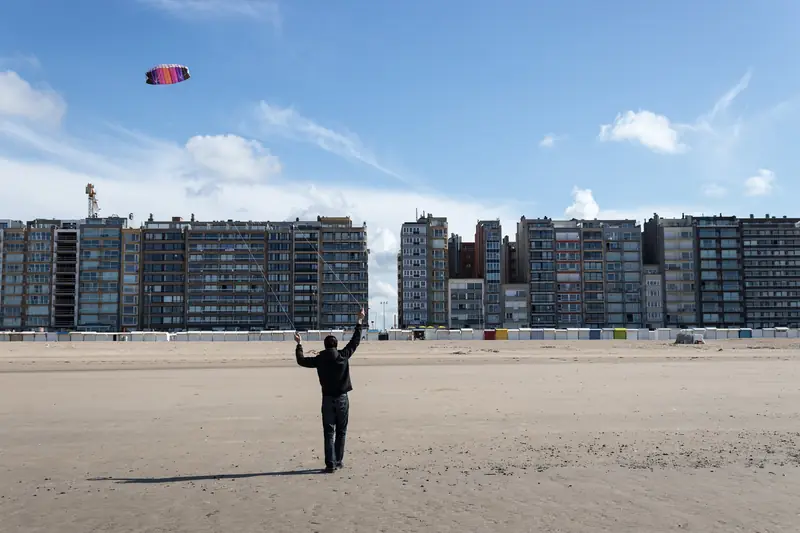
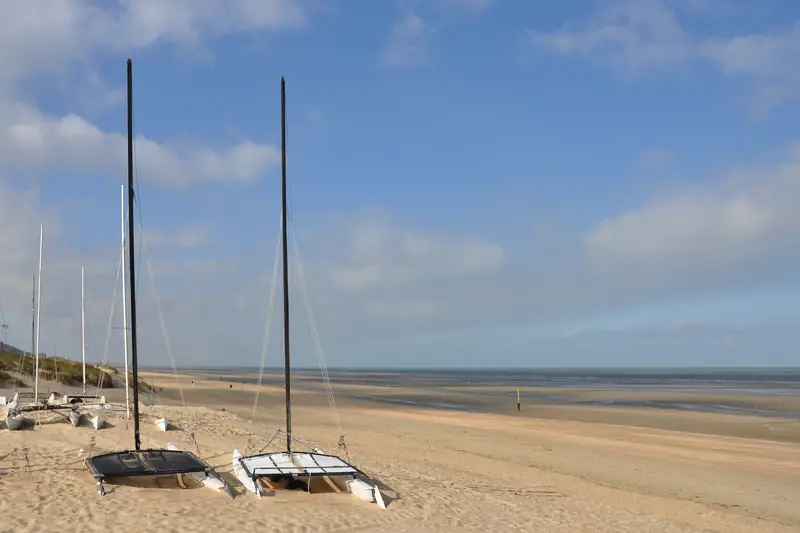
A holiday home in Koksijde lies on the Belgian west coast, in West-Vlaanderen, between De Panne and Nieuwpoort. You usually choose between Koksijde-Bad by the sea and Koksijde-Dorp inland. At low tide the beach is between 250 and 700 metres wide, and the dunes with the Hoge Blekker are close by.
One special thing: the municipality of Koksijde is bigger than its seaside resort. Oostduinkerke and Wulpen are sub-municipalities, and Sint-Idesbald lies on the coast, within the sub-municipality of Koksijde. Oostduinkerke and Sint-Idesbald therefore each have a guide of their own.
Koksijde-Bad or Koksijde-Dorp?
Koksijde-Bad is the newer tourist centre on the coast. Koksijde-Dorp is the old centre of Koksijde, about two kilometres from the shoreline. That difference decides where you look for a holiday home in Koksijde.
- If you want to walk to the beach, choose Koksijde-Bad. The beach, the villa district Quartier Sénégalais and the Koksijde-Bad tram stop are all there.
- If you want to stay in the old village centre, choose Koksijde-Dorp. Count on about two kilometres to the shoreline.
- If you want to walk in the dunes, either will do. The Hoge Blekker lies along the road between Koksijde-Bad and Koksijde-Dorp.
- If you are looking for an artists' place, also look at Sint-Idesbald, west of Koksijde-Bad. You can read more in our guide to a holiday home in Sint-Idesbald.
If you travel without a car, the location counts even more. The NMBS station Koksijde is in Veurne, almost six kilometres from the Koksijde-Bad tram stop. The coast tram does run all the way to Koksijde-Bad. How the tram works, you can read in our coast tram facts.
The beach of Koksijde
The beach of Koksijde is between 250 and 700 metres wide at low tide, writes Wikipedia. At high tide there is less beach. So check the tides before you plan a walk on the beach.
If you travel with your dog, check the current beach rules on the website of the municipality of Koksijde. These rules change from time to time.
According to Wikipedia, Koksijde lies in the middle of the dunes and has 701 hectares of nature reserve. After the beach, a walk in the dunes follows naturally.
The Hoge Blekker and the Noordduinen
The Hoge Blekker is a nature reserve in Koksijde with the highest dune ridge on the Flemish coast: 33 metres. The area is 18 hectares and open to walkers on the paths all year round. Blekker is the popular name for a bare dune hill that reflects the sunlight. What you see there and how to walk there, you can read in our article about the Hoge Blekker and the Noordduinen.
The Noordduinen in Koksijde are a dune area of 73 hectares, enclosed by houses, campsites and a military base. According to the Natuur en Bos leaflet, there are three walking trails with marker posts. The Copilliepad with yellow posts does not cross the grazing zones and suits walkers with dogs. On the Massartpad and the Loppenspad you meet donkeys or ponies. According to the leaflet, dogs are not allowed on these two trails.
Abbey, windmill and villa district
The Abdijmuseum Ten Duinen in Koksijde tells the story of the abbey Onze-Lieve-Vrouw Ten Duinen. That Cistercian abbey joined the order of Cîteaux in 1138 and was abolished in 1796. The archaeological site is open to the public. Check the opening hours on the museum's website. You can read more about the vanished abbey in our article about the Abdijmuseum Ten Duinen.
In Koksijde-Bad stands the Zuid-Abdijmolen, a post mill from 1773. It originally stood in Houtem near Veurne. The municipality of Koksijde bought it in 1951 and placed it on the mill mound of the original abbey mill. It has been a protected monument since 1974.
The Quartier Sénégalais in Koksijde-Bad is a villa district from the Belle Epoque. It was laid out from 1908 and has been protected as a village townscape since 2001. The avenues radiate like a star from the Bad Schallerbachplein, where the Manneken Pis of Koksijde stands. According to Wikipedia, where the name comes from is unknown.
The modernist Onze-Lieve-Vrouw-ter-Duinenkerk in Koksijde-Bad is also called the cathedral of light, as Wikipedia names it.
What can you do in Koksijde?
Koksijde has more to offer than beach and dunes. A short overview:
- Horseback shrimpers and fisheries museum. Oostduinkerke, a sub-municipality of Koksijde, is known for its horseback shrimpers. The NAVIGO National Fisheries Museum is there too. How this fishing works, you can read in our article about the horseback shrimpers of Oostduinkerke.
- Cinema. According to Wikipedia, Cinema Koksijde is the only cinema on the west coast and in the Westhoek.
- Cyclo-cross. Koksijde organises the Duinencross every year, a cyclo-cross race in the dunes. The first edition was in 1969. In 1994 and 2012, Koksijde hosted the cyclo-cross world championships on that course.
- Festivals. According to Wikipedia, Koksijde holds, among others, the Sterrestoet on Epiphany and the Schildersstoet on the first Sunday of August. An overview is in our article about events in Koksijde.
Holiday home or hotel in Koksijde?
Both work. What suits you depends on your party and on how much you want to arrange yourself.
- Space and kitchen. In a holiday home in Koksijde you have more space and a kitchen of your own. That is handy with children or after a day in the dunes.
- Privacy. You have your own front door and no shared breakfast room.
- Cost per person. If you travel with a family or a group, you share one home instead of several rooms. The cost per person is then often lower.
- Checking in. A hotel has a front desk and a fixed arrival time. With a holiday home, you agree in advance how and when you get in.
- Breakfast and cleaning. A hotel arranges breakfast, reception and cleaning. With a holiday home, you do more yourself.
If you want space, a kitchen of your own and privacy, a holiday home in Koksijde suits you better. If you want breakfast and a reception desk, a hotel suits you better.
If you book a holiday home on the Belgian coast via boekdekust.be, you book directly with the owner. Guests are verified via Stripe. You get local support if anything comes up.
Frequently asked questions
Where is Koksijde?
Koksijde lies on the Belgian west coast, in West-Vlaanderen, between De Panne and Nieuwpoort. The municipality consists of the sub-municipalities Koksijde, Oostduinkerke and Wulpen.
What is the difference between Koksijde-Bad and Koksijde-Dorp?
Koksijde-Bad is the newer seaside resort by the sea. Koksijde-Dorp is the old centre, about two kilometres from the shoreline.
How high is the Hoge Blekker in Koksijde?
The Hoge Blekker is 33 metres high. That is the highest dune ridge on the Flemish coast. The nature reserve is open to walkers on the paths all year round.
Can you take the train to Koksijde?
The NMBS station Koksijde is in Veurne and closer to the centre of Veurne than to that of Koksijde. For Koksijde-Bad and Sint-Idesbald, according to Wikipedia, it can be more worthwhile to ride to De Panne and take the coast tram from there. Check the timetable with NMBS and De Lijn.
What can you do in Koksijde when it rains?
You visit the Abdijmuseum Ten Duinen, in Oostduinkerke the NAVIGO National Fisheries Museum, or Cinema Koksijde. Check the opening hours on the websites of the museums and the cinema.
Where do you stay in Koksijde?
On boekdekust.be you book holiday homes on the Belgian coast directly with the owner. The booking is usually confirmed straight away. Guests pay a service fee.
Finally
Koksijde combines a wide beach, dunes and a piece of abbey history on the Belgian coast. Choose Koksijde-Bad for the beach and Koksijde-Dorp for the old centre. If you want to stay in Koksijde, you can view holiday homes in Koksijde.
Sources: Wikipedia: Koksijde, Wikipedia: Hoge Blekker, Wikipedia: Quartier Sénégalais, Wikipedia: Ten Duinen Abbey, Wikipedia: Zuid-Abdijmolen, Wikipedia: Koksijde station, Wikipedia: Duinencross, Natuur en Bos: Noordduinen leaflet, Abdijmuseum Ten Duinen: things to see and do