Duinbergen is a seaside resort in Knokke-Heist on the Belgian coast, laid out to a plan around 1900. The lawyer Donat Van Caillie founded the Société Anonyme de Duinbergen in 1901. The German urban planner Joseph Stübben drew up the plan for a garden seaside resort: keep the dunes, no straight streets and detached villas with a garden.
Something special: the picturesque villa style of Duinbergen was eagerly taken up in Het Zoute in Knokke from 1908, according to the Onroerend Erfgoed inventory. What you can still see of old Duinbergen varies: the atmosphere of the garden seaside resort is fairly well preserved according to the inventory, but along the sea wall little or nothing is left, according to Wikipedia.
A short overview
- Location: Duinbergen is a district of Knokke-Heist and belongs to the sub-municipality of Heist, between Heist and Knokke.
- Designer: Joseph Stübben, a German urban planner.
- Initiator: Donat Van Caillie, a lawyer in Brugge, who founded the Société Anonyme de Duinbergen in 1901.
- What remains: the villa avenues, the Christ the King Chapel of 1905 and the Holy Family Church of 1939.
From Zeebergen to Duinbergen
Around 1900, a large, undeveloped area of dunes lay between Heist-aan-Zee and Knokke. It belonged to the Serweytens family. Donat Van Caillie, grandson of Charles Serweytens and a lawyer in Brugge, gave Duinbergen its big push.
In 1893 he had a wooden building put up in the dunes to receive walkers. It was called Zeebergen. He had it renamed Duinbergen to avoid confusion with Zeebrugge.
In 1901 came the Société Anonyme de Duinbergen, with a clear aim: to develop an entirely new seaside resort. The chosen land was 400 metres wide and about 25 hectares in size. On 25 August 1902, the governor of West-Vlaanderen, Count Karel d'Ursel, formally opened the new resort.
Stübben's plan
Joseph Stübben was called in for the design. From 1881 to 1898 he was city architect of Keulen, and he also worked in Belgium. For Duinbergen he used four basic principles:
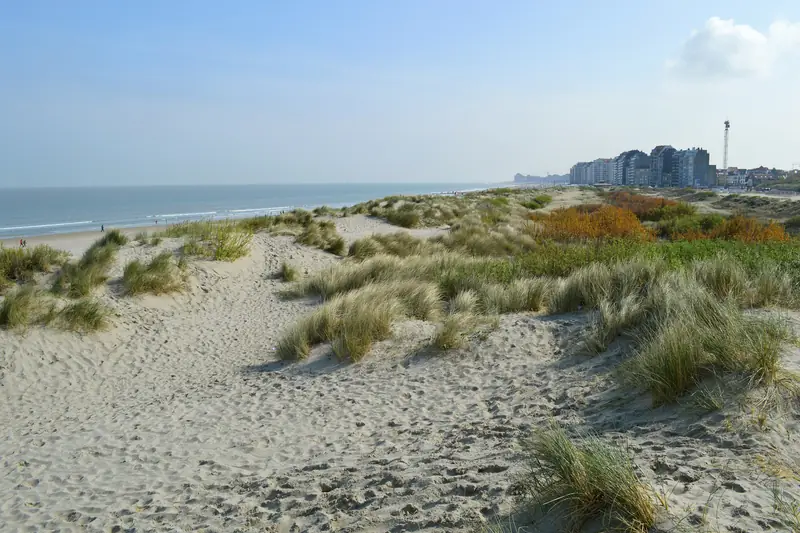
- Keep the dunes.
- Avoid straight streets.
- Leave space in the seaside town. Think of the Europaplein, the Stübbenpark and the Sint-Michielsplein.
- Detached buildings with a garden. That is how a garden seaside resort comes about.
Stübben planned continuous building in three places: around the church, the tram station and the sea wall. All other building blocks were reserved for detached villas. The plan was not followed everywhere: paths were laid out in the building blocks to allow denser building. The main streets are the sea wall, the Elisabetlaan along the tram line of 1890 and the Duinbergenlaan, from the tram station to the sea wall.
The original plan provided for four public buildings: a station, a church or chapel, a kursaal and a restaurant on a dune top with a panoramic view. The kursaal and the restaurant were never built.
The Société also guarded the style. The so-called "Style Duinbergen" banned high-rise building and asked for respect for nature when siting a villa and for the traditional Flemish style. Every façade had to be submitted and approved.
Stübben also designed Het Zoute. You can read that story in the history of Het Zoute.
Hotels, villas and a chapel
The architect A. Pirenne designed the first villas and hotels from 1901. His work was an important step in bringing elements of the English cottage style into holiday home architecture.
Duinbergen grew fast. In 1901 one hotel opened, in 1903 a second. In 1903 the laying of water mains and sewers also began. In 1904 the railways decided to extend the line from Heist to Knokke, so that Duinbergen could also be reached by train.
In 1905 Duinbergen had three hotels and more than fifty villas, with about 3000 tourists. For devout holidaymakers, the architect Jozef Viérin built the Christ the King Chapel that year, a neo-Gothic brick building. By 1908 there were already some eighty villas, according to Wikipedia.
From the interwar years to apartments
In 1911 came the Société de Knocke-Duinbergen-Extension, intended to divide the dunes between Duinbergen and Knokke-Bad into plots. The First World War thwarted those plans.
In the interwar years, villa building continued at a high pace. Besides the cottage style, architects also used Art Deco, modernism and farmhouse style. Between 1935 and 1951, city tram line 12 also ran to Duinbergen along the Elisabetlaan.
In 1939 the Holy Family Church came into use. The Christ the King Chapel was then closed and used only in the summer months.
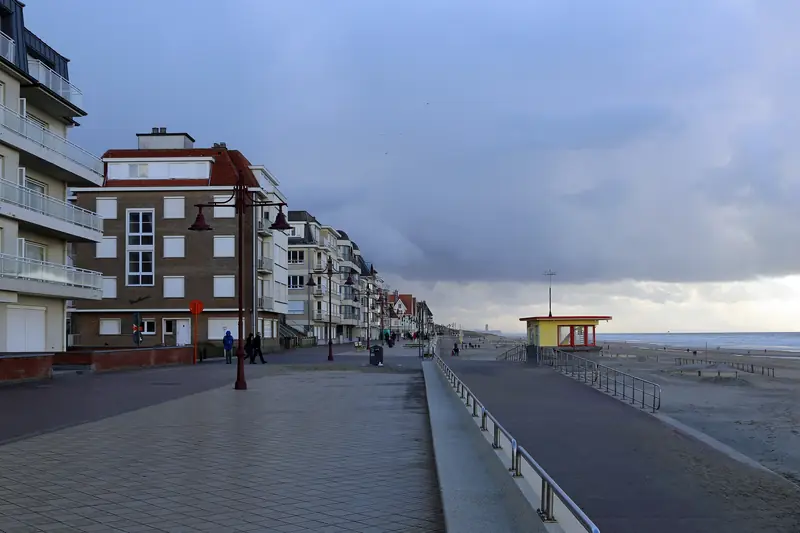
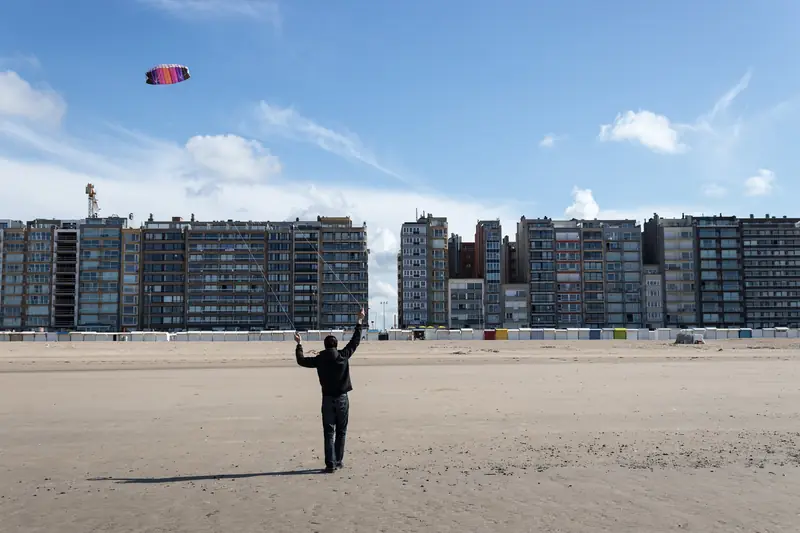
After the Second World War, tourism changed. From the 1950s, the original sea wall buildings were replaced by large apartment blocks. In the decades after, hotels and villas in other building blocks also gave way to bigger buildings. Even so, the atmosphere of the garden seaside resort is fairly well preserved according to the inventory.
What you can still see of old Duinbergen
If you want to see the garden seaside resort, walk through the villa district with its avenues and paths. If you are looking for the original sea wall front, you walk right past it: along the sea wall, little or nothing is left of the original Duinbergen, according to Wikipedia.
- The villa avenues. Villas in cottage style, Art Deco, modernism and farmhouse style, detached and with a garden, as the plan intended. Several villas and apartment buildings are listed as monuments.
- The Christ the King Chapel. A neo-Gothic brick building of 1905, enlarged in 1929.
- The Holy Family Church. The parish church of 1939, with a sturdy tower under a pyramid roof and Stations of the Cross in terracotta.
- Squares and park. The inventory names the Europaplein, the Stübbenpark and the Sint-Michielsplein as examples of the space in Stübben's plan.
Duinbergen belongs to the sub-municipality of Heist. You can read more about the village itself in holiday home in Heist.
Frequently asked questions
Who designed Duinbergen?
The German urban planner Joseph Stübben made the plan for Duinbergen. He worked with four principles: keep the dunes, avoid straight streets, leave space for squares and parks, detached buildings with a garden.
When did Duinbergen come into being?
The wooden building Zeebergen dates from 1893. The Société Anonyme de Duinbergen followed in 1901, and the opening on 25 August 1902.
Where does the name Duinbergen come from?
A wooden building from 1893 was first called Zeebergen. It was given the name Duinbergen to avoid confusion with Zeebrugge.
Where is Duinbergen on the Belgian coast?
Duinbergen lies between Heist and Knokke, in the municipality of Knokke-Heist. According to Knokke-Heist, the beach access is at the end of the Duinbergenlaan.
Where do you stay in Duinbergen?
On boekdekust.be you book holiday homes on the Belgian coast directly with the owner. The booking is usually confirmed straight away, and guests pay a service fee. You can read how to book safely in booking a holiday home safely, without fraud.
Finally
Duinbergen began with a wooden building in the dunes and around 1900 became a planned garden seaside resort. According to the inventory, the atmosphere of that garden seaside resort is fairly well preserved. If you would like to stay there, read holiday home in Duinbergen or go straight to view holiday homes in Duinbergen.
Sources: Inventaris Onroerend Erfgoed, Duinbergen, Wikipedia, Duinbergen, Wikipedia, Christ the King Chapel, Wikipedia, Holy Family Church, Wikipedia, Josef Stübben, Knokke-Heist, Duinbergen beach