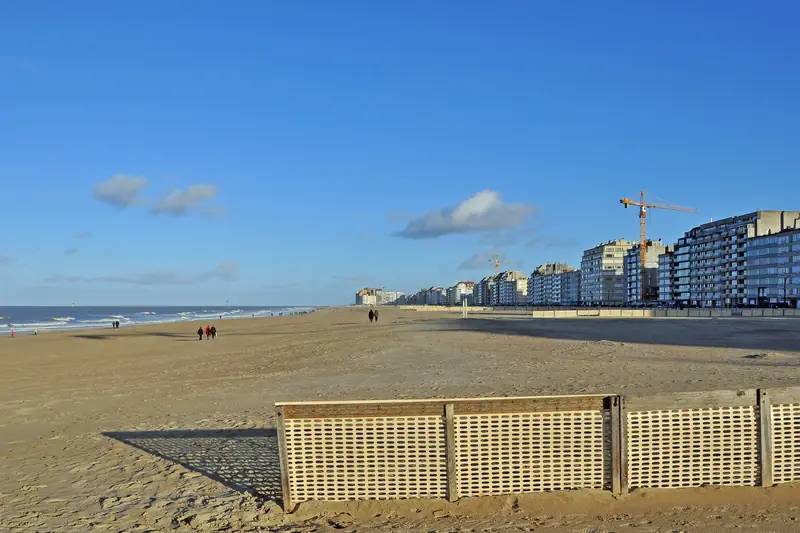
Het Zoute in Knokke-Heist is a villa district on the Belgian coast that was divided into plots out of a dune area from 1908 and 1909. The company Compagnie Immobilière Le Zoute laid out the district as a garden suburb, to plans by the German urban planner Joseph Stübben. Het Zoute is the easternmost part of Knokke and so the easternmost seaside resort in Belgium.
Het Zoute did not grow by itself. The Compagnie built the dyke, roads, electricity and water supply itself, even before the First World War. If you walk there, you see two districts in one: a green villa district and, along the sea, a dyke front full of apartments.
Dunes, polder and a hamlet
Before 1908, Het Zoute was a dune area. Between 1783 and 1787, the Zoutepolder was embanked. In the first half of the 19th century, the hamlet of Zoute grew up, a small group of houses belonging to day labourers who worked the poor sandy soil.
The dunes shifted in strong winds. That is why wooden hedges and marram grass were planted between 1836 and 1845. In 1865, the Watering van de Zoutepolder planted the Blinkaartduinen with thorn bushes and spruces, among other things. That woodland grew into the Sparrenbos on the Blinckaertlaan.
Then the first bathers and sportspeople arrived. In 1900, one of the first golf courses on the European continent lay in the Kleine Vlakte, for a few English golfers.
The Compagnie and Stübben's plan
At the initiative of the cousins Raymond and Maurice Lippens and of Piers de Raveschoot, the Compagnie Immobilière Le Zoute was founded in Gent in 1908. This prevented the estate from being split up after inheritances. The aim was a cité-jardin: a garden city in which sport, quiet and comfort were central.
For the design, the Compagnie called in Joseph Stübben, adviser to King Leopold II. He was already working on Duinbergen and De Haan. The contract was signed on 12 November 1908.
Building regulations of March 1909 laid down strict rules. Owners had to respect building height and building lines, and build within a year. A second set of regulations from 1921 added to these.
A garden suburb of cottages
Stübben did not choose a rigid street grid. He followed the relief of the dunes. The Zoutelaan, the Sparrendreef and the Elisabetlaan form the main axes. Winding footpaths link the streets.
The plots were large. The villas had a garden with a hedge or a low stone wall as a boundary. English country houses, the cottages, inspired by the Arts and Crafts movement, served as the model.
Het Zoute also includes two large dune complexes: the Golf with the Koningsbos, and the Zwin. You can read how to walk there in walking in Het Zoute and the Koningsbos.
The sea dyke and the Albertplein
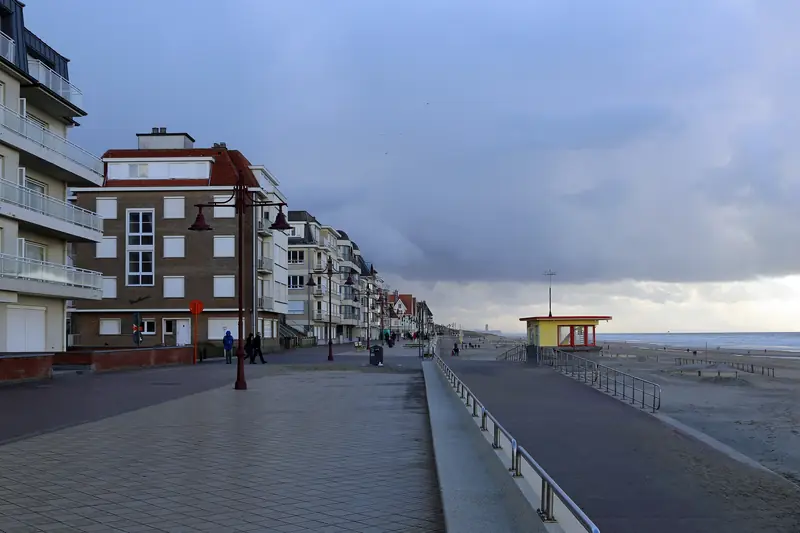
A convention of 1908 between the State and the Compagnie provided that the sea dyke of Knokke would be extended 1500 metres to the east. The first stone was laid on 5 July 1908. By 1909 the dyke was complete. The Albertplein was laid out in 1908 and 1909, still under the name Leopoldplein at that time.
Between 1909 and 1912, another 425 metres of dyke were added, with four breakwaters. On 4 June 1912, the dyke officially opened. It was 5 metres wide and received six electric lanterns.
Rectangular building blocks rose along the dyke, with slopes or ramps down to the Kustlaan. From 1909, the first hotel went up on the dyke of Het Zoute. It became the seed of the resort. In 1912, the electric tram ran from Blankenberge as far as Het Zoute.
Glory years and wars
In the First World War, the Germans fortified the dunes to defend the naval base at Zeebrugge. The golf course became a training ground with trenches, bunkers and artillery.
In the 1920s, the fame of Het Zoute was known across Europe. In 1925, the Dominican church in the Sparrendreef was consecrated, also called the Zoutekerkje. The architect Jozef Viérin designed it in neo-Romanesque style. Church, cloister and presbytery are protected as a monument.
In 1929, Het Zoute got a civil airfield in the Kleine Vlakte. It closed for good in 1960. Between the two wars, Het Zoute was an international resort that threatened to overtake Oostende in exclusivity.
In the Second World War, the German occupier destroyed the bathing facilities. The dyke was incorporated into the Atlantic Wall, and villas and hotels were turned into bunkers.
What you can still see of the history
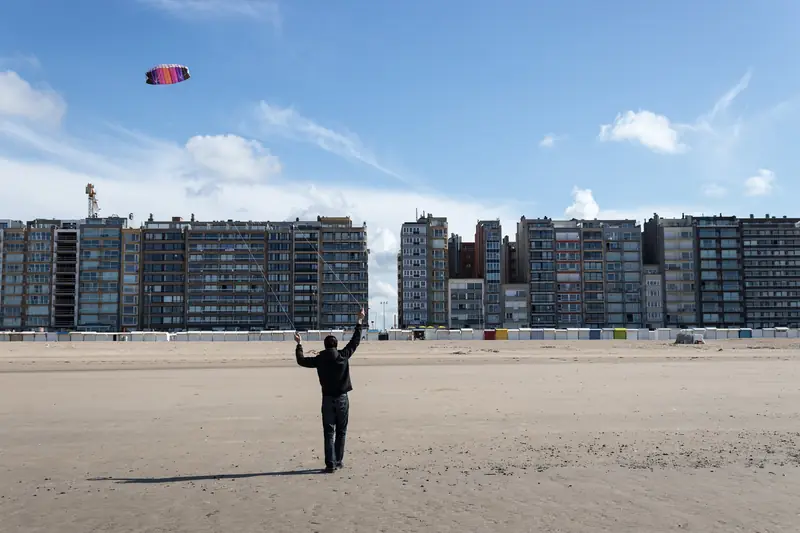
After 1945, Het Zoute kept its exclusive character largely intact, as one of the few seaside resorts to do so. From the 1950s, however, the old buildings along the dyke were replaced by large apartment blocks, up to eight storeys high. In the villa district, several villas from the early years have been listed as monuments.
In 1938, the sea dyke was extended one last time, as far as the Zwinduinen. It ends there, so that nature behind it had free rein. In 1952, the Het Zwin nature reserve followed. You can read more about it in Het Zwin in Knokke-Heist.
Here is how to see the history on foot:
- The villa district. Walk through the district around the Zoutelaan and the Sparrendreef. The cottages often have pointed gables and stand in green gardens with hedges.
- The dyke and the Albertplein. Follow the sea dyke and the ramps to the Kustlaan. The Albertplein is a central point with plenty of cafés and restaurants.
- Het Zoutekerkje. The Dominican church stands in the Sparrendreef, in the small village centre in the middle of the villa district.
Are you planning this for a long weekend? Practical tips are in a long weekend on the Belgian coast. Torn between the villa district and the centre? Then read Het Zoute or Knokke: which district suits you.
Frequently asked questions
When did Het Zoute come into being?
The Compagnie Immobilière Le Zoute was founded in 1908. The division of the dune area into plots followed from 1908 and 1909.
Who designed Het Zoute?
The German urban planner Joseph Stübben drew up the plan for the Compagnie. His contract dates from 12 November 1908.
Is Het Zoute part of Knokke?
Yes. Het Zoute lies in the municipality of Knokke-Heist and is the easternmost part of Knokke. It is also the easternmost seaside resort in Belgium.
Where does the sea dyke of Het Zoute end?
The sea dyke ends at the Zwinduinen. In 1938 it was extended there one last time.
Where do you stay in Het Zoute?
On boekdekust.be you book holiday homes on the Belgian coast directly with the owner. The booking is usually confirmed straight away, and guests pay a service fee. An overview is in holiday home in Het Zoute.
Finally
Het Zoute began as a dune area and became a seaside resort with a style of its own. The villa district still shows how Stübben took the dune landscape as his starting point. If you are staying in Knokke-Heist, holiday home in Knokke lists the districts side by side, and you can always view holiday homes in Het Zoute.
Sources: Inventaris Onroerend Erfgoed, Knokke - Het Zoute, Inventaris Onroerend Erfgoed, Zeedijk-Het Zoute, Wikipedia, Het Zoute, Inventaris Onroerend Erfgoed, Dominican church, Heritage society Cnocke is Hier, Seventy-five years of Zoute-Compagnie