Heist on the Belgian coast was a fishing village for centuries. As early as the thirteenth century the parish was known for its fishing, in 1541 Heist got an inner harbour with the Sas, and in 1901 its own fish auction. Around 1907 fishing slowly moved to the port of Zeebrugge, while Heist kept growing as a seaside resort.
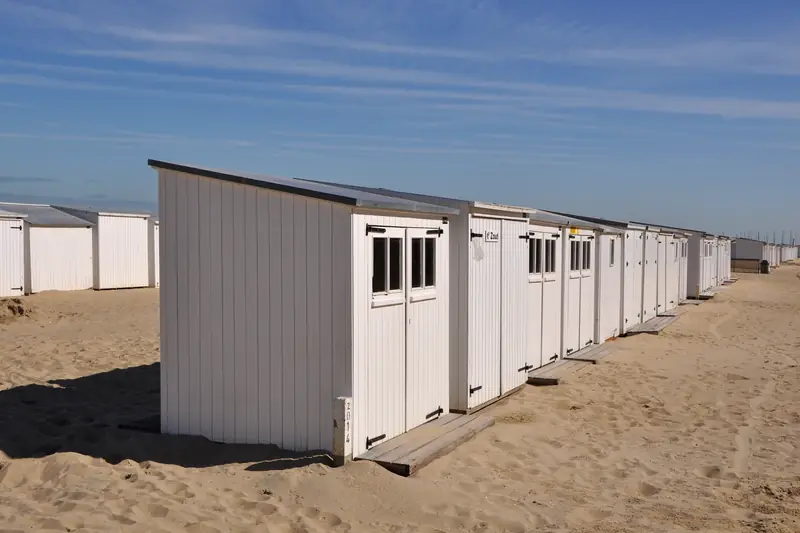
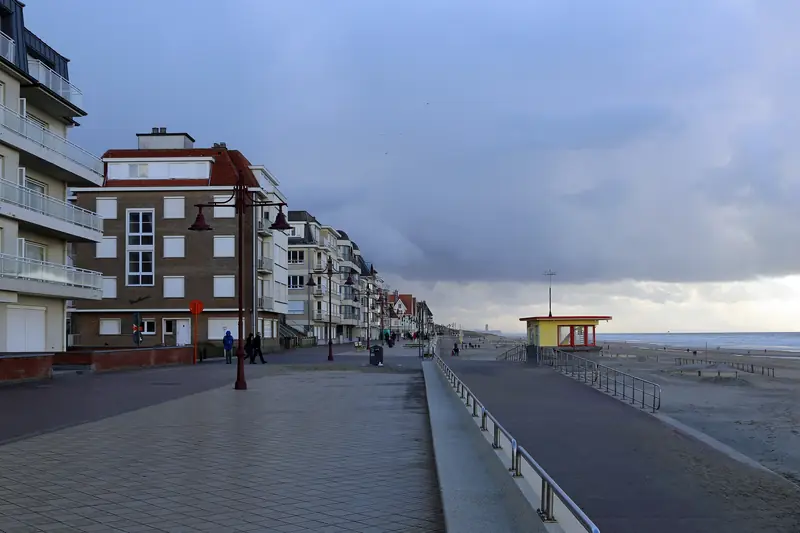
Something unusual: Heist had no harbour on the sea. The fishermen moored their flat-bottomed boats on the beach. You will not find a fishing harbour with ships in Heist. What you do see is the Visserskapel and the monument to the fishermen who were lost at sea.
A short overview
- Thirteenth century: the parish of Heist is famous for its fishing.
- 1541: the Sas van Heist, an inner harbour, is built.
- 1800: only four boats still put to sea.
- 1892: the present Visserskapel is built.
- 1901: Heist gets a fish auction.
- 1907: the port of Zeebrugge is officially opened, and the boats slowly disappear from the beach at Heist.
- 1940: the last fishing vessels are registered in Heist.
The Sas van Heist
In the thirteenth century the parish of Heist was very famous for its fishing, writes a local history article by the heritage society Heyst Leeft on the knowledge centre of HEY Knokke-Heist. According to the same article, which draws on a history of the diocese of Brugge, Heist and Meunikenreede near Damme were then the two leading fisheries of Flanders.
In 1541 the Sas van Heist was built, an inner harbour on the west side of the present market square. Thanks to that waterway, Heist brought its fish to Brugge as quickly as the skippers of Blankenberge. Under Emperor Charles V the parish reached its peak, according to Maurits Coornaert. In 1548 the fleet of Heist counted nine herring ships, each with fourteen sailors and three or four lavers, the boys on board.
Decline and recovery
Then came the wars. During the Eighty Years' War Heist fell into decline and many fishermen moved away to Zeeland. From 1750 to 1760 new fishermen settled in Heist again.
Recovery was slow. According to an article from 1921, which the heritage society Heyst Leeft later edited, only four boats put to sea from Heist in 1800. In 1848, according to Maurits Coornaert, 18 boats sailed. In 1889 the fleet counted 28 vessels, and in 1911 there were 65. In 1921 there were 80.
Boats on the beach
The boats of Heist had a flat bottom. That meant they could land on the beach at low tide. A boat was on average eleven metres long and five metres wide. Until 1904 they were built behind the dunes. Only when Zeebrugge got a harbour did people build sloops with a sharp keel.
The beach itself was also a fishing ground. People hauled the net on foot and on horseback. At each end of a haul net, the zegen, a horse was harnessed, and so the net was drawn through the low water for a few hours. In winter the women and children knitted the korren, the drag nets.
The Visserskapel and the monument
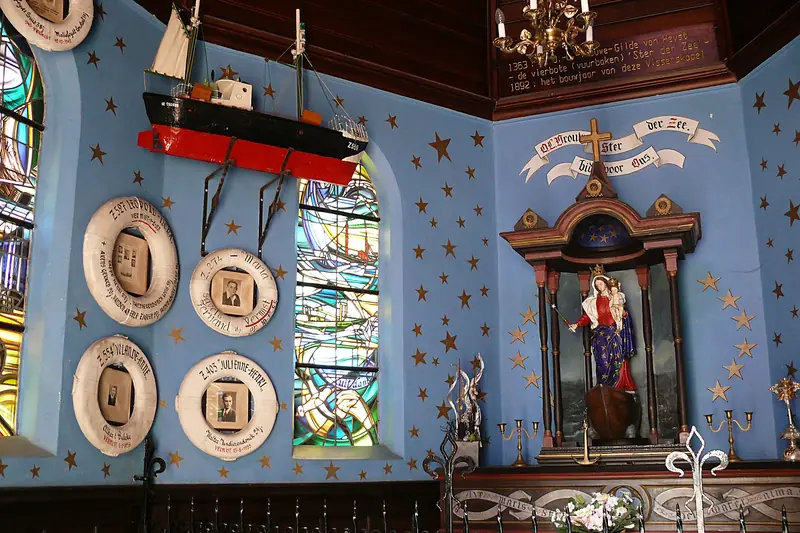
In 1854 parish priest Nounckele had a neo-Gothic chapel built in the dunes. The shipowner Cornelius Bassens donated an eighteenth-century statuette of Mary, which drew the fishing families. In 1868 the chapel had to make way, according to Wikipedia for works to divide the land into building plots, according to Coornaert for the railway to Heist. In 1892 a new one appeared: the present Visserskapel on the Cornelius Bassensplein.
According to Wikipedia, 27 lifebuoys and 35 frames in memory of family members who were lost at sea hang in the Visserskapel, among other things. In 1975 the original statue of Mary was stolen. On 1 November 1975 a copy was unveiled. Since 1985 the chapel has had heritage status, and in 2017 it was restored again.
At the monument to the fishermen lost at sea, a wreath is laid on Carnival Sunday, after the fishermen's mass. You can read how that festival goes in carnival in Heist. The caramel sweet of Heist has its own story in babelutten from Heist.
The fish auction of 1901 and the move to Zeebrugge
In 1901 Heist got its own fish auction. It did not stay in use for long. In 1907 the port of Zeebrugge was officially opened, about three kilometres from Heist, with a harbour basin for fishing vessels. The boats slowly disappeared from the beach at Heist. According to Coastal Wiki, the fish auction of Heist lost its function after only five years.
A detail shows the change. A boat from Heist carried an H on its sail. If it was registered in Zeebrugge, it carried a Z. By 1921 sixteen boats from Heist were already registered in Zeebrugge.
When the First World War broke out, the fishing fleet of Heist counted 69 vessels. Of these, 53 set course for the Netherlands. Of the 55 boats that left, only 33 returned to Heist in December 1920. In 1940 the last fishing vessels were registered in Heist. After that the fleet mostly chose Zeebrugge as its home port.
What is left of the fishing past?
- If you are looking for the story of the fishing families, go to the Visserskapel.
- If you want to see a fishing harbour with ships, go to Zeebrugge. You can read more about the port in holiday home in Zeebrugge.
- If you are looking for the lighthouse of Heist, read the story first. It is in the lighthouses of the Belgian coast.
- If you want to read on yourself, choose the local history texts. HEY Knokke-Heist puts them online on the knowledge centre.
Frequently asked questions
Was Heist a fishing village?
Yes. The parish of Heist was already known for its fishing in the thirteenth century. From 1907 fishing slowly moved to Zeebrugge.
What is the Sas van Heist?
The Sas was an inner harbour from 1541, built on the west side of the present market square of Heist. Via the waterway the fish could go to Brugge.
Since when has the Visserskapel stood in Heist?
The present Visserskapel dates from 1892. The first chapel, from 1854, had to make way in 1868.
When did Heist get a fish auction?
In 1901. After about five years that fish auction lost its function, when the boats moved to the port of Zeebrugge.
Where do you stay in Heist?
On boekdekust.be you book holiday homes on the Belgian coast directly with the owner. The booking is usually confirmed straight away. Guests pay a service fee. You can read more about the place in holiday home in Heist.
Finally
Heist was not a port town, but a village of fishermen who went out from the beach. The story runs from the Sas in 1541 to the fish auction in 1901, and you can read it again in a chapel and a monument. Want to see it for yourself? Then you can view holiday homes in Heist.
Sources: Wikipedia: Heist, Wikipedia: Visserskapel (Heist)), Wikipedia: Zeebrugge, HEY Knokke-Heist: Fishing at Heist aan zee before 1925, HEY Knokke-Heist: The origin of Heist and the fishing of Heist, HEY Knokke-Heist: knowledge centre, Coastal Wiki: Fisheries in Heist, Immaterieel Erfgoed: Heist Carnaval