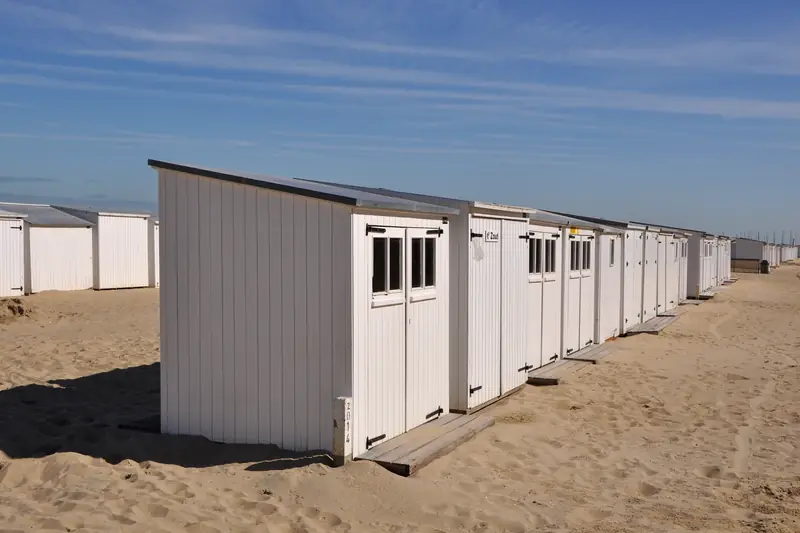
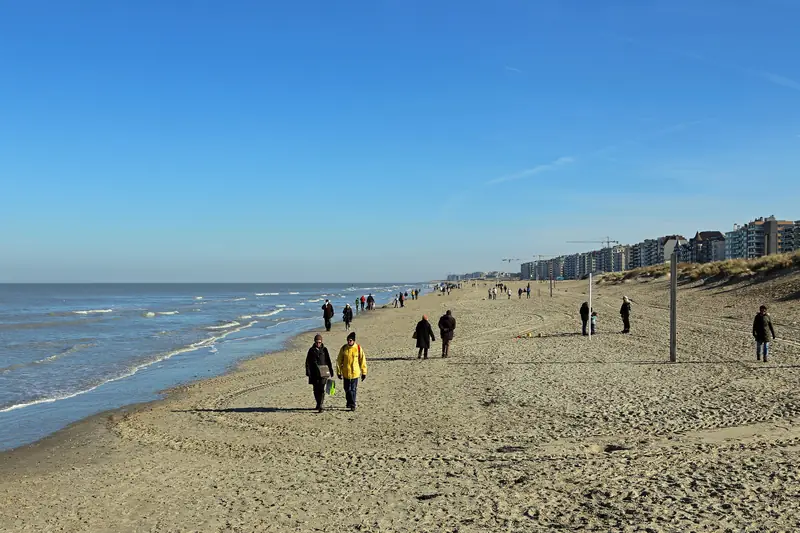
A holiday home in De Panne lies at the far west of the Belgian coast, against the French border. You choose between the centre by the seafront, the villa district Dumontwijk and the village of Adinkerke. The beach is wide, dunes and woods surround the town and the coast tram has seven stops in De Panne.
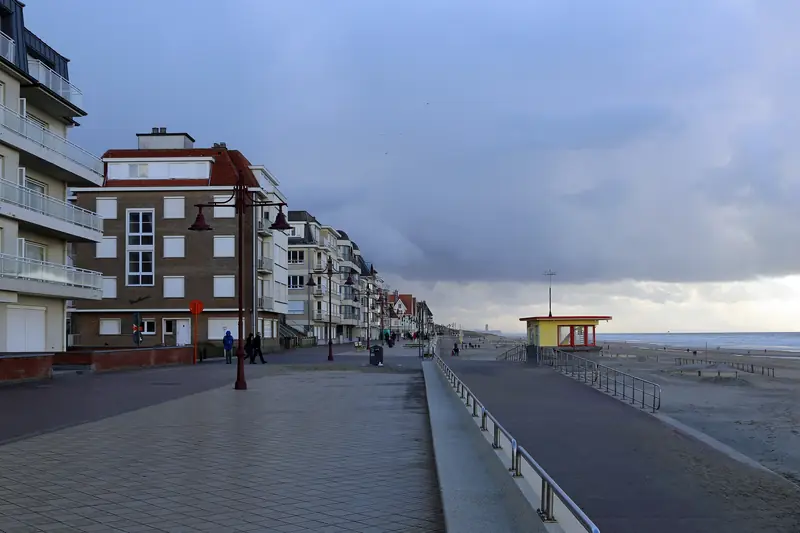
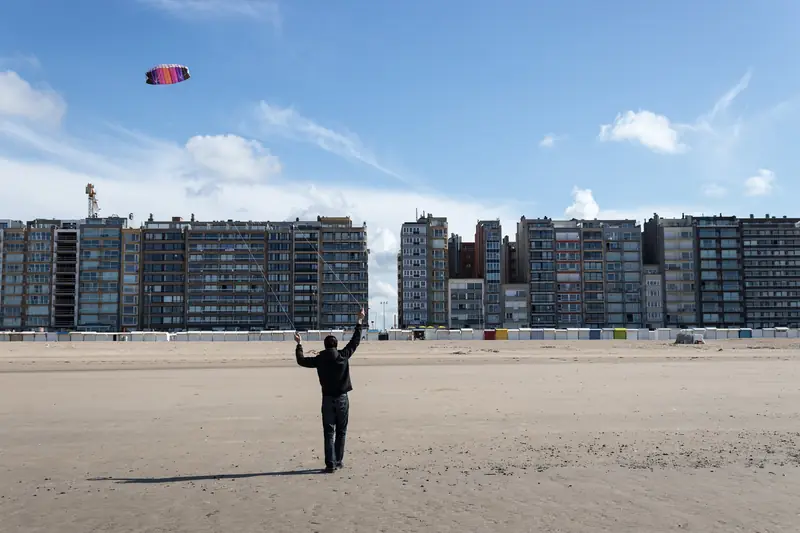
Mass tourism changed the look of the streets. From the 1950s the coastal villas gave way to taller apartment blocks, mainly on the seafront. The old cottage style survived in the Dumontwijk, among other places.
A short overview
- Location: De Panne is the westernmost town in Belgium. Across the border lies Bray-Dunes in France.
- Beach: the widest on the Belgian coast, about 450 metres at low tide.
- Seafront: a promenade of 2.5 kilometres.
- Dunes: nature reserve De Westhoek, almost 350 hectares in size.
- Coast tram: seven stops, three in Adinkerke and four in De Panne itself.
- Name: the word comes from duinpan, a bowl-shaped hollow in the dunes.
Centre, Dumontwijk or Adinkerke
The municipality of De Panne has two settlements. De Panne itself lies by the sea. Adinkerke lies three kilometres inland, along the Nieuwpoort-Duinkerke canal.
The centre by the seafront
If you want a flat or house with the beach, shops and tram close by, choose the centre of De Panne. There are many shops. Four tram stops lie in De Panne itself: Kerk, Esplanade, Centrum and Golfstraat. Apart from a few villas, the seafront is mostly apartment blocks.
The Dumontwijk
If you want to stay in a residential district with character, choose the Dumontwijk. The core of this district has more than 500 homes and dates from the end of the 19th century. You find different building styles, typical cottages and winding little streets there. The district is named after the architect Albert Dumont.
A heritage walk of 4.3 kilometres through the Dumontwijk starts at the town hall of De Panne. The tram stop Kerk is closest to that starting point.
Adinkerke
If you travel by train, or want Plopsaland close by, choose Adinkerke. De Panne station is in Adinkerke and the grounds of Plopsaland De Panne border the station grounds. Three tram stops lie in Adinkerke: Station, Plopsaland and Moeder Lambic. You can read more about the village in the guide to a holiday home in Adinkerke.
The beach and the seafront
The beach at De Panne has no breakwaters and is the widest on the Belgian coast. At low tide it measures about 450 metres. That is why De Panne is known for sand yachting, also called beach sailing. The Dumont brothers introduced the sand yacht here in 1898 as a leisure pursuit. At the Royal Sand Yacht Club you can try it yourself.
You walk along the 2.5-kilometre seafront. At the western end lies the Westerpunt, which the municipality presents as a viewpoint. The Leopold I Esplanade recalls Leopold I, the first king of the Belgians, who arrived in De Panne by coach on 17 July 1831.
If you travel with children, read De Panne with children first. If you take a dog along, the beach zones are covered in De Panne with your dog. And if you come out of season, look at De Panne in winter.
Dunes and woods
De Panne is surrounded by nature areas. The nature reserve De Westhoek is almost 350 hectares in size. It is part of De Duinen en Bossen van De Panne, the largest continuous dune area on the Flemish coast.
The municipality also holds the Calmeynbos, the Oosthoekduinen and the Houtsaegerduinen. Between the Calmeynbos and the Oosthoekduinen stands the provincial visitor centre Duinpanne, with a museum. The 10.5-kilometre Westhoek walking route starts there and has a lot of loose sand.
Want to know what you see on the way? That is in walking through De Westhoek. If you would rather walk through a residential district than through loose sand, follow the heritage route through the Dumontwijk.
By tram or train
The coast tram has seven stops in De Panne: Station, Plopsaland and Moeder Lambic in Adinkerke, and Kerk, Esplanade, Centrum and Golfstraat in De Panne itself. In summer the trams run every 10 minutes there, according to the municipality. De Panne station is the end of the coast tram line, which starts in Knokke.
If you want to stay without a car, choose a home close to a tram stop. You can read what else you need to know about the line in the coast tram from De Panne to Knokke-Heist.
You arrive in Adinkerke by train. De Panne station is the last Belgian station on railway line 73 before the French border. Check the current timetable with NMBS and De Lijn before you leave.
Holiday home or hotel in De Panne?
Both are possible in De Panne. The choice depends on your group and on how you spend your days.
- Space: a holiday home usually gives more space, often with separate bedrooms and a living room. A hotel room is usually more compact.
- Kitchen: in a holiday home you cook for yourself, handy after a long walk on the beach and with children. For the name holiday home, Toerisme Vlaanderen requires a kitchen with a hob and a fridge, and for the name hotel a daily breakfast in a shared dining room.
- Privacy: with a holiday home you have your own lockable entrance and your own rhythm. In a hotel you share the common areas with other guests.
- Cost per person: with a family or group, more people share one home. Whether that works out cheaper per person than several hotel rooms depends on your dates: work it out yourself.
- Check-in and cleaning: a hotel has a recognisable reception or front desk. With a holiday home you arrange your arrival in advance with the owner. Toerisme Vlaanderen requires a clean before every stay for a holiday home, and a daily clean for a hotel.
If you want to hand everything over for a quick night or two, a hotel suits better. If you stay longer or travel with more people, a holiday home usually suits better.
Frequently asked questions
How wide is the beach at De Panne?
The beach at De Panne is about 450 metres wide at low tide. It is the widest on the Belgian coast and has no breakwaters.
What is the Dumontwijk in De Panne?
The Dumontwijk is a villa district in De Panne, named after the architect Albert Dumont. The core has more than 500 homes and dates from the end of the 19th century.
How many tram stops does De Panne have?
The coast tram has seven stops in De Panne: Station, Plopsaland, Moeder Lambic, Kerk, Esplanade, Centrum and Golfstraat. The first three are in Adinkerke.
What can you do in De Panne?
You walk along the 2.5-kilometre seafront and try sand yachting on the wide beach. In the nature reserve De Westhoek you walk through the dunes. In the Dumontwijk you follow the heritage walk of 4.3 kilometres.
Where can you stay in De Panne?
You choose between the centre by the seafront, the Dumontwijk and Adinkerke. On boekdekust.be you book holiday homes on the Belgian coast directly with the owner. The booking is usually confirmed at once. Guests pay a service fee.
Finally
De Panne suits anyone who wants a wide beach, dunes and a tram stop close by. Choose the centre for shops and sea, the Dumontwijk for atmosphere and Adinkerke for the train and Plopsaland. That way you quickly find the place that suits your stay: view holiday homes in De Panne.
Sources: Wikipedia: De Panne, Wikipedia: Dumontwijk, Wikipedia: De Panne station, Visit De Panne: Dumontwijk, Visit De Panne: heritage walking route, Visit De Panne: hiking, Visit De Panne: by tram, Visit De Panne: adventure in De Panne, Toerisme Vlaanderen: holiday home, Toerisme Vlaanderen: hotel, Natuur en Bos: De Westhoek leaflet