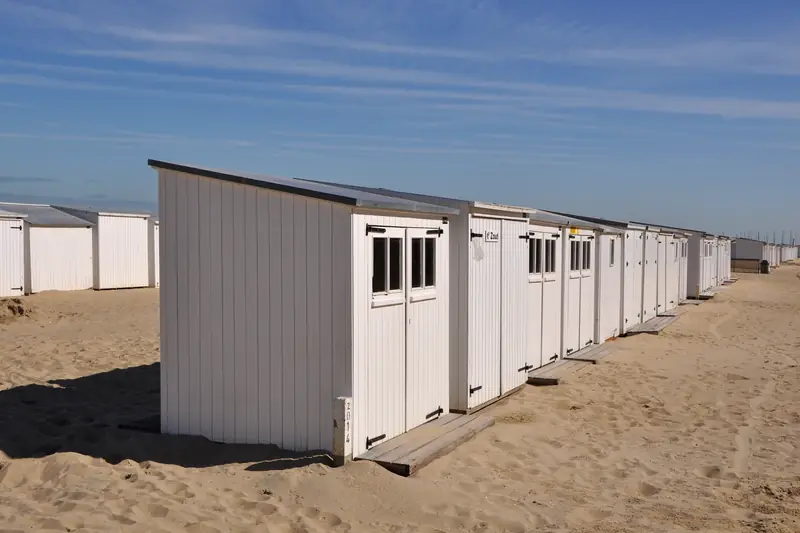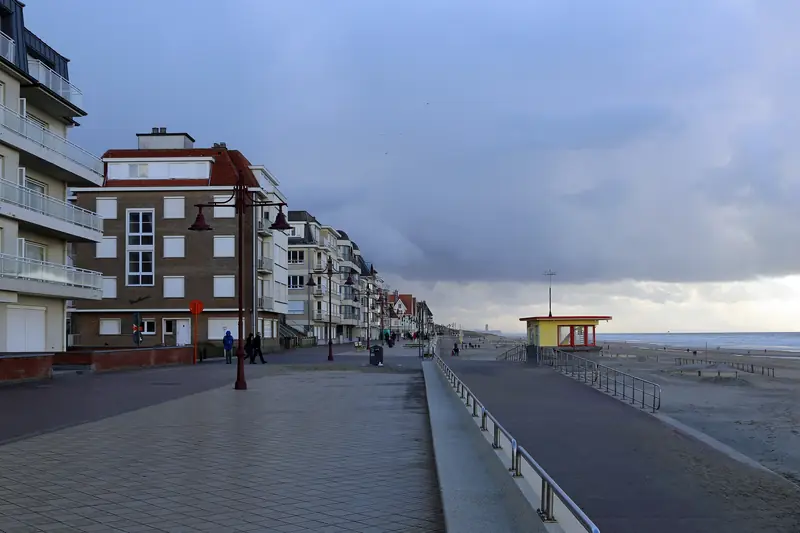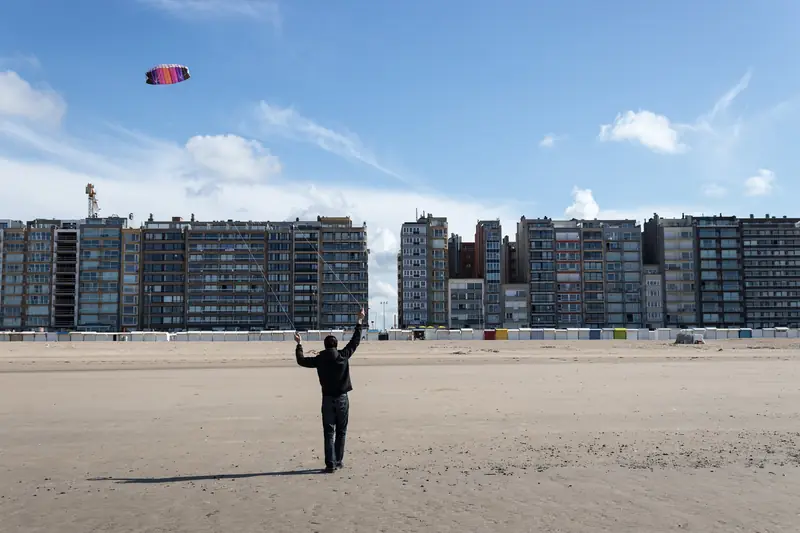
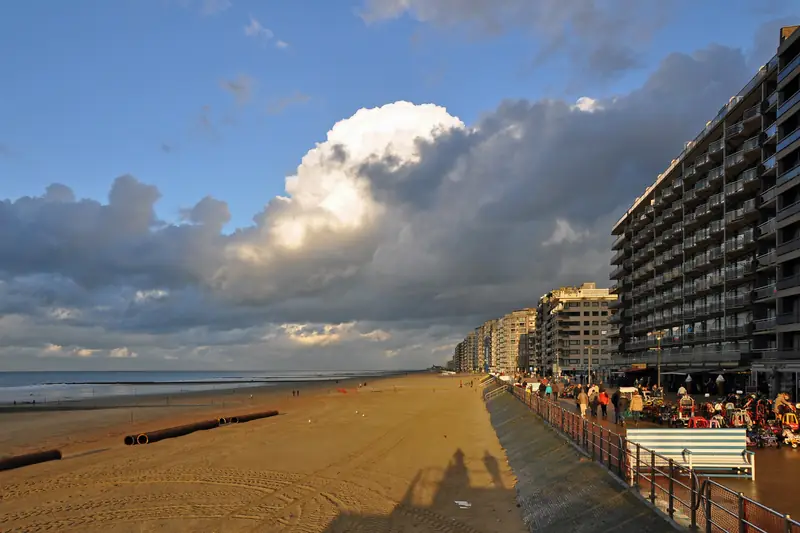
Westende-Bad is a seaside resort on the Belgian coast in the municipality of Middelkerke. It grew out of the dunes after the entrepreneur Edouard Otlet from Brussel bought 64 hectares of dune land in 1887. The first villas appeared in 1896. The Grand Hôtel Bellevue, known as the Rotonde, opened in 1911 and, according to the municipality of Middelkerke, is the only building in Westende from before the First World War.
One striking thing: almost everything from the years before that war has gone. Most of what you see in Westende-Bad dates from after the war. The Rotonde is the exception, and a small villa with an interior by Henry Van de Velde tells the rest of the story.
A seaside resort in the dunes
Edouard Otlet first used the dunes as hunting ground. In 1894 he chose an exclusive holiday resort, writes Onroerend Erfgoed. He was a banker and senator and, as a builder of tramlines, had the nickname "king of the tramways". The year of purchase differs by source: Onroerend Erfgoed gives 1887, the Wikipedia article on Westende 1888.
In 1898 Otlet founded the company La Westendaise with six relatives. Everything was built with private capital. That year also brought a first brick sea wall of 354 metres, with the Westend Hotel and a kursaal. Wikipedia gives 1897 for the sea wall. In 1905 and 1911 the sea wall was extended by 832 and 580 metres.
The first street plan by the architect Alban Chambon was only partly built. Octave Van Rysselberghe completed the plan in 1903. The centre got straight streets, the edge winding avenues with room for greenery. Strict building rules were meant to give the resort a coherent look.
In 1903 the electric tramline Oostende-Middelkerke-Bad was extended to Westende-Bad. That line later became part of the coast tram. Just before the First World War, Westende-Bad had about 250 villas and two large hotels, according to Onroerend Erfgoed.
The Grand Hôtel Bellevue, the Rotonde
The Grand Hôtel Bellevue stands on the east side of Westende-Bad. It was built from 1909 to 1911 to a design by Octave Van Rysselberghe, who was also a shareholder. The hotel opened in June 1911.
The construction was progressive for its time. A reinforced concrete frame was clad in natural stone slabs. The hotel had two lifts and sixteen baths with warm sea water.
The Rotonde owes its name to the semicircular front section, where the dining room was on the ground floor. The hotel also had tennis courts, a cinema, a chapel and an exhibition hall. In the basement was a spa for treatments with sea water. There were garage boxes, with separate lodgings for the chauffeurs.
War and reconstruction
The First World War destroyed Westende completely, writes Wikipedia. According to Onroerend Erfgoed, apart from the Grand Hôtel Bellevue almost nothing was left standing. That hotel too was badly damaged. The concrete structure stopped it from disappearing altogether, writes the municipality of Middelkerke. For the fighting at Nieuwpoort, read the flooding of the IJzer plain in 1914.
The hotel was restored between 1920 and 1924, plainer and more modern than before. In 1951 and 1952 the hotel rooms became apartments. So there are no hotel rooms left in the main building.
Westende was rebuilt in the 1920s and 1930s. Many cottages got their prewar design back. In 1930 the Sint-Theresiakapel was built in Westende-Bad. The Westend Hotel was rebuilt in 1924 as Westend Palace and demolished in 1972.
With mass tourism from the 1960s came apartment blocks, and almost all the villas disappeared. On the sea wall, blocks of up to ten storeys appeared from the 1960s. The village centre of Westende-Bad has been a protected village view since 1996.
Villa Les Zéphyrs and Henry Van de Velde
Villa Les Zéphyrs in Westende-Bad was built in 1922 as a holiday home for the Muyshondt family of doctors from Gent, to plans by the architect Oscar Van de Voorde. The dining room and the smoking room have an art nouveau fit-out. The panelling, sideboards and chimneypiece are by Henry Van de Velde.
Lieven Daenens of the Design Museum Gent dated that ensemble to 1898. It is among the earliest known work by Van de Velde. The interior probably came from another building and was fitted into the villa later.
Villa Les Zéphyrs is protected as a monument and has a museum section. There you see how a well-off family spent holidays by the sea between the two wars. Check the opening hours on the website of the municipality of Middelkerke.
Seeing Westende-Bad
A few rules of thumb:
- Rotonde. If you want to see the hotel, walk along the sea wall of Westende-Bad to the east side. The main building consists of apartments, so you look at it from outside.
- Tram. If you come by coast tram, get off at the Westende Bellevue stop. According to the municipality of Middelkerke, that stop was built specially at the hotel. Check the timetable with De Lijn.
- Sea wall. If you want to walk along the sea wall of Westende, read Westende in winter.
- Walking. If you are looking for more exercise, choose the walk from Westende to Nieuwpoort along the IJzermonding. Nieuwpoort lies west of Westende. Anyone who wants to stay the night there should first read holiday home in Nieuwpoort.
- Eating. On the sea wall in Westende a culinary event takes place every year: Tastoe in Westende.
Frequently asked questions
Who built Westende-Bad?
The entrepreneur Edouard Otlet from Brussel bought dunes near Westende in 1887 and had a seaside resort developed there. The architect Octave Van Rysselberghe completed the street plan in 1903.
When was the Rotonde in Westende built?
The Grand Hôtel Bellevue, the Rotonde, was built from 1909 to 1911 and opened in June 1911. Wikipedia gives 1909 as the year of the design.
Is the Rotonde in Westende protected?
Yes. According to Onroerend Erfgoed, the facades and roofs have been protected as a monument since 1983, the interior since 1995.
What was left of Westende after the First World War?
According to Onroerend Erfgoed, apart from the Grand Hôtel Bellevue almost nothing was left standing in Westende-Bad. The resort was rebuilt in the 1920s and 1930s.
Where can you stay in Westende?
On boekdekust.be you book holiday homes on the Belgian coast directly with the owner. The booking is usually confirmed straight away. Guests pay a service fee. You can read more about the place in holiday home in Westende.
Finally
Before the First World War, Westende-Bad grew from dune into an elite seaside resort, and it lost almost everything in the war. The Rotonde is the visible trace of it. Villa Les Zéphyrs shows how a well-to-do family spent holidays there between the two wars. Do you want to stay overnight in Westende? Then you can view holiday homes in Westende.
Sources: Onroerend Erfgoed, Westende-Bad, Onroerend Erfgoed, Dorpskom Westende-Bad, Onroerend Erfgoed, Grand Hôtel Belle Vue, Onroerend Erfgoed, Villa Les Zéphyrs, Middelkerke, Grand Hotel Bellevue, Middelkerke, Grand Hotel Bellevue (the Rotonde), Middelkerke, Villa Les Zéphyrs, Wikipedia, Westende, Wikipedia, Édouard Otlet, Wikipedia, coast tram, Toerisme Westende, Tastoe