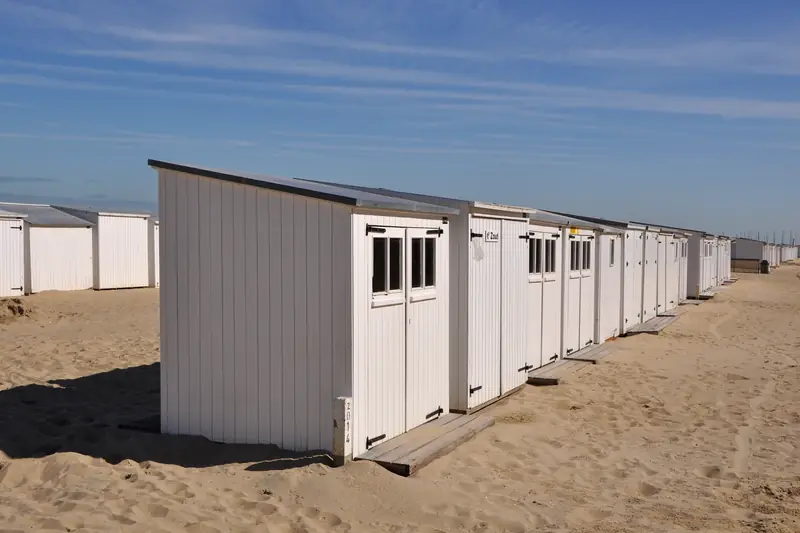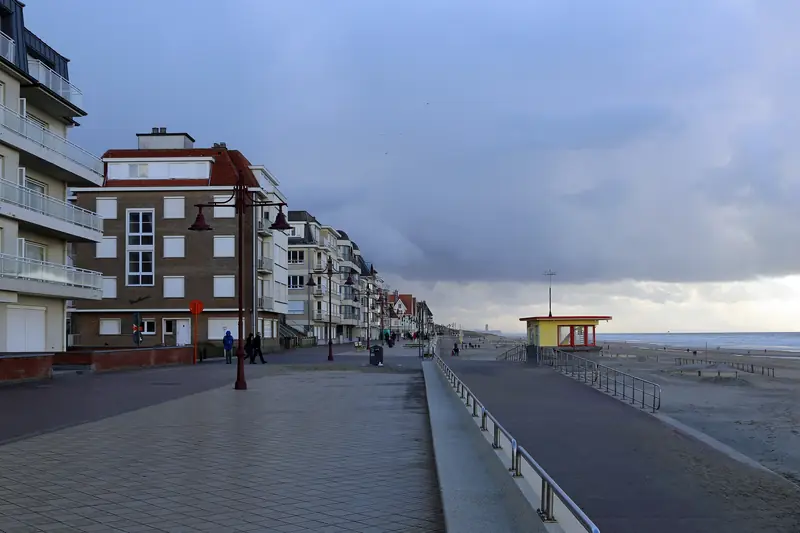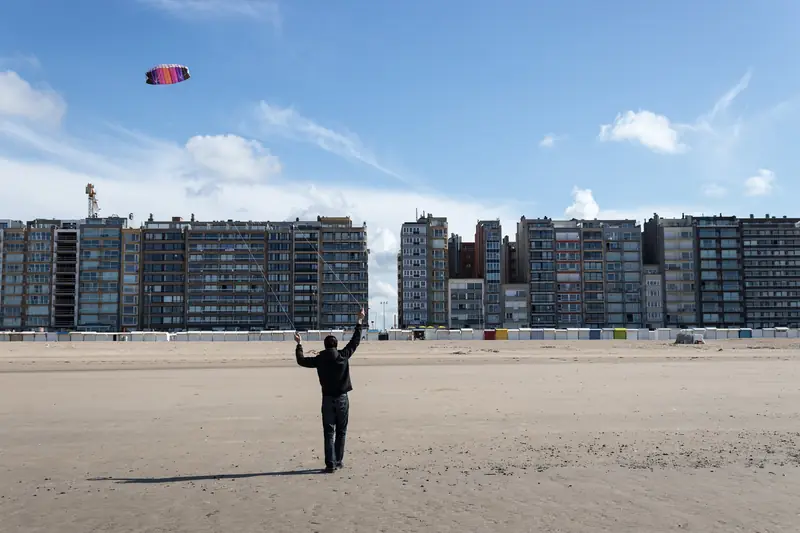
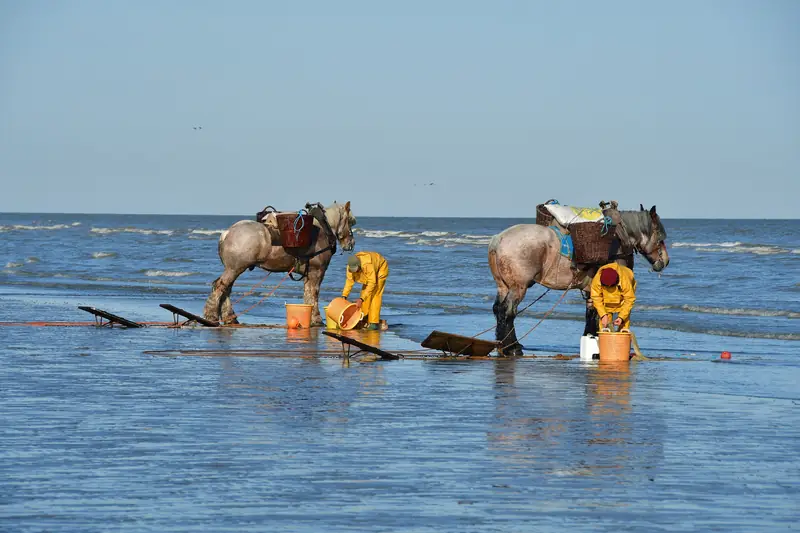
Oostduinkerke lies on the western stretch of the Belgian coast, in the municipality of Koksijde. It is a quiet seaside resort among the dunes, with a beach that is about a kilometre wide at low tide. For a holiday home in Oostduinkerke, look at Oostduinkerke-Bad by the sea, at Oostduinkerke-Dorp, a little further inland, or at one of the neighbourhoods.
Oostduinkerke is known for its shrimp fishers on horseback, but the resort offers more. You will find a dune area of 260 hectares, a fisheries museum, a swimming pool with a view of the sea and a coast tram that stops in Oostduinkerke-Bad. Below you can read where to stay and what to do there.
Where to stay in Oostduinkerke
Oostduinkerke consists of two centres and several neighbourhoods. Wikipedia names Oostduinkerke-Bad and Oostduinkerke-Dorp, plus Duinpark, Mariapark, Groenendijk, Sint-André and Witte Burg, among others. These are the choices that matter for a guest:
- Oostduinkerke-Bad. This is the coast itself, with seafront, beach and swimming pool. If you want the beach close by, choose a stay here.
- Duinpark. This neighbourhood borders the Zeebermduinen, which lie between the Karthuizerduinen and the sea.
- Mariapark. A quiet villa district close to the Hannecartbos and the Ter Yde Duinen. If you want peace between woods and dunes, look at Mariapark.
- Groenendijk. This neighbourhood borders Nieuwpoort. If you plan trips to Nieuwpoort, Groenendijk is close.
- Oostduinkerke-Dorp. The former fishing village lies where the dunes turn into the Polders. If you want a village centre, Oostduinkerke-Dorp suits better than the seaside resort.
Oostduinkerke is part of Koksijde. If you also want to explore Koksijde-Bad and the surrounding area, read our guide to a holiday home in Koksijde.
The beach and the beach fishers
The beach at Oostduinkerke is wide and gently sloping, and it has no groynes. According to Wikipedia, these features suit land sailing and parakarting. The surf clubs of Koksijde-Oostduinkerke offer sailing, windsurfing or kitesurfing, stand-up paddleboarding and wingfoiling, says the municipality of Koksijde.
The beach fishers work on that beach too. The best known are the shrimp fishers on horseback. You can read how that works in our article on the horseback fishers of Oostduinkerke. You also see the shrimp fishers on foot, with a push net or a drag net. NAVIGO lists other forms as well, such as setting small nets, angling and bait digging.
Do you want to taste the shrimp afterwards? Then read all about grey shrimp and shrimp croquettes. The Garnaalfeesten, the shrimp festival of Oostduinkerke, also revolve around the shrimp, with, according to Wikipedia, a parade themed around fishing. If you want to be there, check the current dates on visitkoksijde.be.
The dunes of Ter Yde
Ter Yde is a dune area of 260 hectares between Oostduinkerke and Groenendijk. It includes the Zeebermduinen, the Karthuizerduinen, the Plaatsduinen, the Spelleplekke and the Hannecartbos, among others. The Natuur en Bos agency manages a large part of it as a Flemish nature reserve. The name refers to a fishing settlement from the 13th century. Yde means sheltered harbour.
The area is freely accessible on the footpaths. The red footpath is open from 15 July up to and including 15 March, so not during the breeding season. Dogs must be kept on a lead. Cyclists can use the cycle path through the Hannecartbos. For routes, read walking in Oostduinkerke and the Hannecartbos.
There is something to see in Ter Yde outside the summer too. In the winter half of the year, large flocks of fieldfares and redwings settle there, looking for berries. In spring the natterjack toad spawns in the young dune slacks. Sheep and Konik horses graze there as nature managers.
A swimming pool and a museum
The Strandbad Oostduinkerke is an open-air swimming pool on the seafront. It has a 25-metre pool, a pool for toddlers and young children and a terrace. The municipality of Koksijde calls itself the only seaside resort where you can swim with a view of the sea. According to Wikipedia, the heated pool opened in the 1950s and is the only swimming pool on the beach along the Belgian coast. Opening hours differ by month, so check them on the Koksijde website.
The NAVIGO fisheries museum is in Oostduinkerke-Dorp. The museum calls itself a family museum, with North Sea aquariums, a fisherman’s cottage and the wooden fishing vessel OD 1. Martha. You can read exactly what you will see there in our article on NAVIGO in Oostduinkerke. For more ideas with young guests, there is Oostduinkerke with children.
By coast tram to Oostduinkerke
The Kusttram runs along the Belgian coast from Knokke to Adinkerke. The line is 67 kilometres long and is operated by De Lijn. For Oostduinkerke, Wikipedia names the stops Groenendijk, Home Theunis, Duinpark, Bad and Schipgat.
According to Wikipedia, the electric tram line reached Oostduinkerke-Bad in 1929. Without a car, you can get to Oostduinkerke from Oostende or De Panne this way. Check the current stops and times with De Lijn.
Holiday home or hotel in Oostduinkerke?
Both work. What suits depends on your party and on how much you want to arrange yourself.
- Space and kitchen. In a holiday home in Oostduinkerke you get more space and a kitchen of your own. That is handy with children or if you want to cook yourself after a day at the beach.
- Privacy. You stay in your own home and do not share a breakfast room.
- Cost per person. If you travel with a group or family, you share one home instead of several rooms. Work out for yourself what comes out cheaper for your party.
- Checking in. A hotel has a front desk and a fixed arrival time. With a holiday home you agree in advance how and when you get in.
- Breakfast and cleaning. In a hotel, breakfast, reception and cleaning are usually taken care of. With a holiday home you arrange more yourself.
If you want space, a kitchen of your own and privacy, a holiday home suits better. If you want breakfast and cleaning without worry, a hotel suits better.
If you book a holiday home on the Belgian coast through boekdekust.be, you book directly with the owner. Guests are verified through Stripe. You get local support if anything comes up.
Frequently asked questions
What can you do in Oostduinkerke?
You walk in the dunes of Ter Yde, visit the NAVIGO fisheries museum, swim in the Strandbad on the seafront and watch the beach fishers on the beach. You can surf and sail through the surf clubs of Koksijde-Oostduinkerke.
Is Oostduinkerke by the sea?
Yes. Oostduinkerke-Bad is on the Belgian coast, in the municipality of Koksijde in West-Vlaanderen. Oostduinkerke-Dorp is a little further inland, on the edge of the Polders.
Does the coast tram go to Oostduinkerke?
Yes. The Kusttram stops in Oostduinkerke at Duinpark and Bad, among others. Check the current stops and times with De Lijn.
Can you take your dog to the dunes of Ter Yde?
Yes, but on a lead, says the Natuur en Bos agency. The area is freely accessible on the footpaths.
Where can you stay in Oostduinkerke?
On boekdekust.be you book holiday homes on the Belgian coast directly with the owner. The booking is usually confirmed straight away. Guests pay a service fee.
Finally
Oostduinkerke offers a wide beach, dunes and a fisheries museum in one seaside resort. It suits anyone who wants peace and quiet, even outside the summer. If you want to stay there, you can view holiday homes in Oostduinkerke.
Sources: Wikipedia: Oostduinkerke, Natuur en Bos: Ter Yde leaflet, Municipality of Koksijde: Strandbad Oostduinkerke, Municipality of Koksijde: our shrimp fishers, Municipality of Koksijde: Garnaalfeesten, NAVIGO: our beach fishers, NAVIGO: plan your visit, NAVIGO: directions, Municipality of Koksijde: surf clubs, Wikipedia: Kusttram