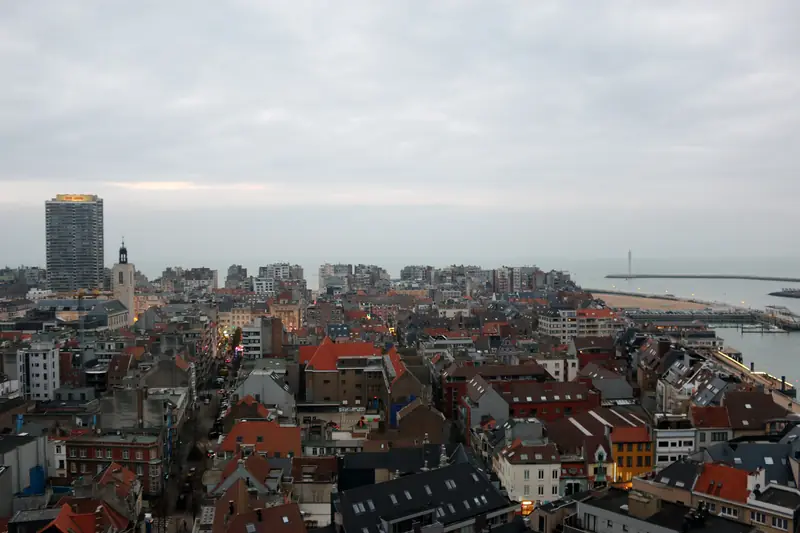
You choose a holiday home in Oostende on the Belgian coast by zone. You stay in the centre near the station, on the sea dyke, by the harbour with the Oosteroever or on the west side in Mariakerke and Raversijde. The coast tram runs through the town and a free ferry crosses the harbour channel.
Something special, though: Oostende is not an ordinary little beach town. The town flourished under King Leopold II and was nicknamed the Queen of the Seaside Resorts. According to Wikipedia, it is a seaside resort that also has ports for industry and fishing.
A short overview
Oostende does not have four official districts. According to Wikipedia, the town has eight, including Centrum, Vuurtoren, Raversijde and Mariakerke/Nieuwe Koers. The four zones below are a guide for guests.
- Coming by train? Then choose the centre. The railway station, the tram station and the bus station are next to each other.
- Want the sea on your doorstep? Then choose the sea dyke. The Koninklijke Gaanderijen and the Kursaal are there.
- Looking for water and ships? Then choose the harbour. The Mercator, the Visserskaai and the ferry to the Oosteroever are there.
- Want a residential area with dunes nearby? Then choose the west side. Mariakerke is a residential area, Raversijde has a provincial domain of about 50 hectares.
The centre near the station
Oostende station is the terminus of the railway line from Brussel via Gent and Brugge. The current building, in belle-époque style, was inaugurated on 1 August 1913. According to Wikipedia, the station connects Oostende directly with, among others, Brugge, Gent, Brussel and Antwerpen.
Next to the station are a bus station and a coast tram station. If you travel without a car, the centre is a logical start. If you come by car, the A10 ends in Oostende.
According to its own website, the Kursaal is within walking distance of the station. The Mercator lies in the marina, between the station and the town hall. According to Wikipedia, the Kapellestraat is the main shopping street of Oostende.
The sea dyke
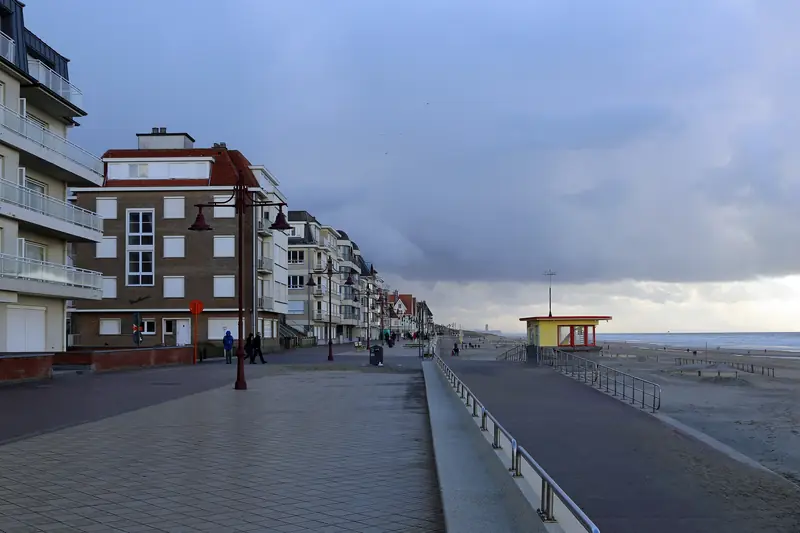
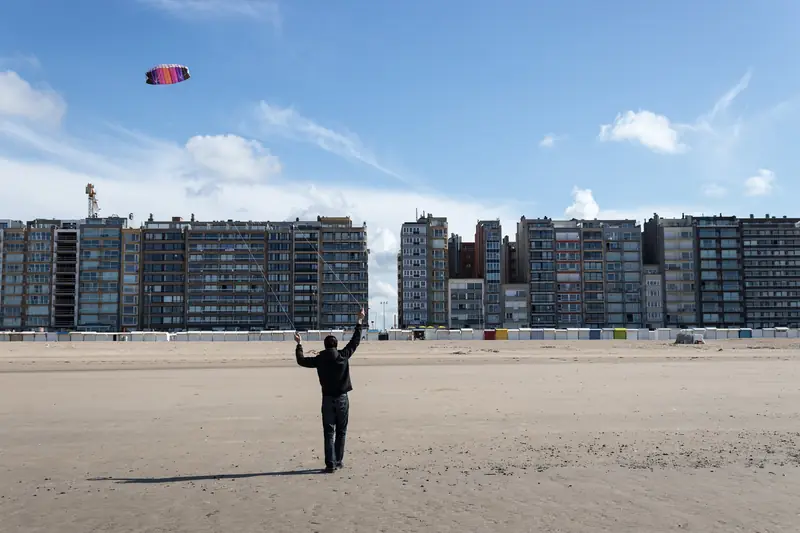
According to Wikipedia, the coastal front of apartment blocks is typical of the look of Oostende. If you want an apartment with a sea view, you therefore look along the dyke. If you want the sea on your doorstep, choose the sea dyke.
The Koninklijke Gaanderijen stand on the sea dyke. They were built between 1902 and 1906 on the orders of the town and King Leopold II. The colonnade served as a covered passage to the racecourse. The story is in Koninklijke Gaanderijen in Oostende.
The Kursaal lies by the sea, in the middle of the town. The Marie-Joséplein tram stop is nearby. From the car park on the Visserskaai it is about fifteen minutes on foot, according to the Kursaal.
If you travel with a dog, rules apply on the beach depending on the time of year. Check them with Toerisme Oostende and read taking your dog to Oostende.
The harbour with the Oosteroever
The Mercator is a three-master, designed by polar explorer Adrien de Gerlache. The ship entered service in 1932 and is a museum ship. You will find it in the marina.
On the Visserskaai lies the Vistrap, an open-air fish market. It arose in the nineteenth century with the expansion of the harbour. According to Toerisme Oostende, the Vistrap is the only place in Belgium where you can buy shrimps directly from the fisherman.
A free ferry sails from the Visserskaai to the Maritiem Plein on the Oosteroever. According to Fort Napoleon, it is fifteen minutes on foot from the landing stage to the fort. According to Wikipedia, Fort Napoleon lies in the dunes on the Oosteroever, within walking distance of the harbour and the sea.
If you are looking for water and ships, choose the harbour. If you travel with children, first read Oostende with children.
The west side with Mariakerke and Raversijde
Mariakerke and Raversijde lie on the west side of Oostende. According to Wikipedia, Mariakerke has completely merged with the town centre and is a residential area of the town. The coast tram has stops in Mariakerke and Raversijde.
The Raversijde provincial domain lies right by the sea and partly among the dunes. It is about 50 hectares in size. You will find the Atlantikwall open-air museum and the archaeological site Walraversijde there, the vanished fishing village from the fifteenth century.
If you want a residential area with dunes nearby, choose Mariakerke or Raversijde. If you want the station, harbour and dyke close together, the centre suits better. You can read more about the area in holiday home in Mariakerke.
Holiday home or hotel in Oostende?
According to Wikipedia, Oostende has many campsites, hotels and apartments. Which form suits depends on your party and the length of your stay.
- Space: according to Toerisme Vlaanderen, a holiday home has a dining area with one seat per sleeping place.
- Kitchen: in a holiday home you cook for yourself, on a hob with at least two rings and with a fridge of at least 90 litres. A hotel offers breakfast every day in a shared dining room.
- Privacy: in a holiday home you are with your own party. In a hotel you share the reception and the breakfast room.
- Cost per person: a group shares the cost of one home. If you travel as a couple, compare both.
- Checking in: a hotel has a reception or front desk. With a holiday home, according to Toerisme Vlaanderen, the operator can be reached during office hours and you agree the arrival in advance.
If you want a night or two without fuss, choose a hotel. If you stay longer or travel with more people, a holiday home usually suits better. A full comparison is in holiday home or hotel on the coast.
On boekdekust.be you book a holiday home on the Belgian coast directly with the owner. Guests are verified via Stripe and you get local support.
Frequently asked questions
Where is Oostende on the Belgian coast?
Oostende lies in West-Vlaanderen, roughly in the centre of the Belgian coast. According to Wikipedia, the town is about 35 km from the Dutch border and 30 km from the French border.
Can you get to Oostende without a car?
Yes. Oostende station has direct trains to, among others, Brugge, Gent, Brussel and Antwerpen. The coast tram departs next to the station and, according to Wikipedia, links all the seaside resorts between Knokke and De Panne.
What is the Oosteroever of Oostende?
The Oosteroever is the eastern bank of the harbour of Oostende. Fort Napoleon lies there in the dunes. A free ferry sails there from the Visserskaai.
Why is Oostende called the Queen of the Seaside Resorts?
According to Wikipedia, Oostende flourished in the early twentieth century under King Leopold II. The king built a world-famous belle-époque seaside resort and the town was nicknamed the Queen of the Seaside Resorts. Around the turn of the millennium, the town council chose the profile City by the Sea.
Where do you stay in Oostende?
You choose between the centre, the sea dyke, the harbour and the west side. On boekdekust.be you book holiday homes on the Belgian coast directly with the owner, and the booking is usually confirmed straight away. Guests pay a service fee.
Finally
Oostende suits anyone who wants to combine town and sea. Choose the centre for the train, the dyke for the sea view, the harbour for boats and fish and the west side for the dunes. If you want to walk the zones in two days, follow a weekend in Oostende on foot. If you want a kitchen of your own, you can view holiday homes in Oostende.
Sources: Wikipedia: Oostende, Wikipedia: Station Oostende, Wikipedia: Koninklijke Gaanderijen, Toerisme Oostende: Mercator, Zeilschip Mercator, Wikipedia: Fort Napoleon, Wikipedia: Raversijde provincial domain, Wikipedia: Raversijde, Toerisme Oostende: Vistrap, Toerisme Oostende: ferry service, Toerisme Oostende: beach rules, Kursaal Oostende: getting there, Fort Napoleon: practical information, Toerisme Vlaanderen: holiday home, Toerisme Vlaanderen: hotel